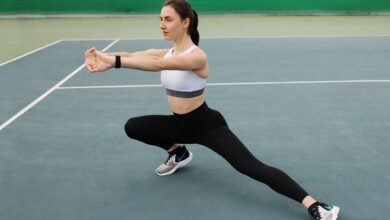
If you have ever stood in the gym wondering how many sets per workout you actually need, you have probably found answers ranging from 3 to 30. Part of the confusion is that most articles mix up three different numbers: sets per exercise, sets per workout, and sets per muscle per week. This guide separates them, gives you clear starting points for your level and goal, and shows you how to adjust the numbers as you progress.
How Many Sets Per Workout Do You Need?
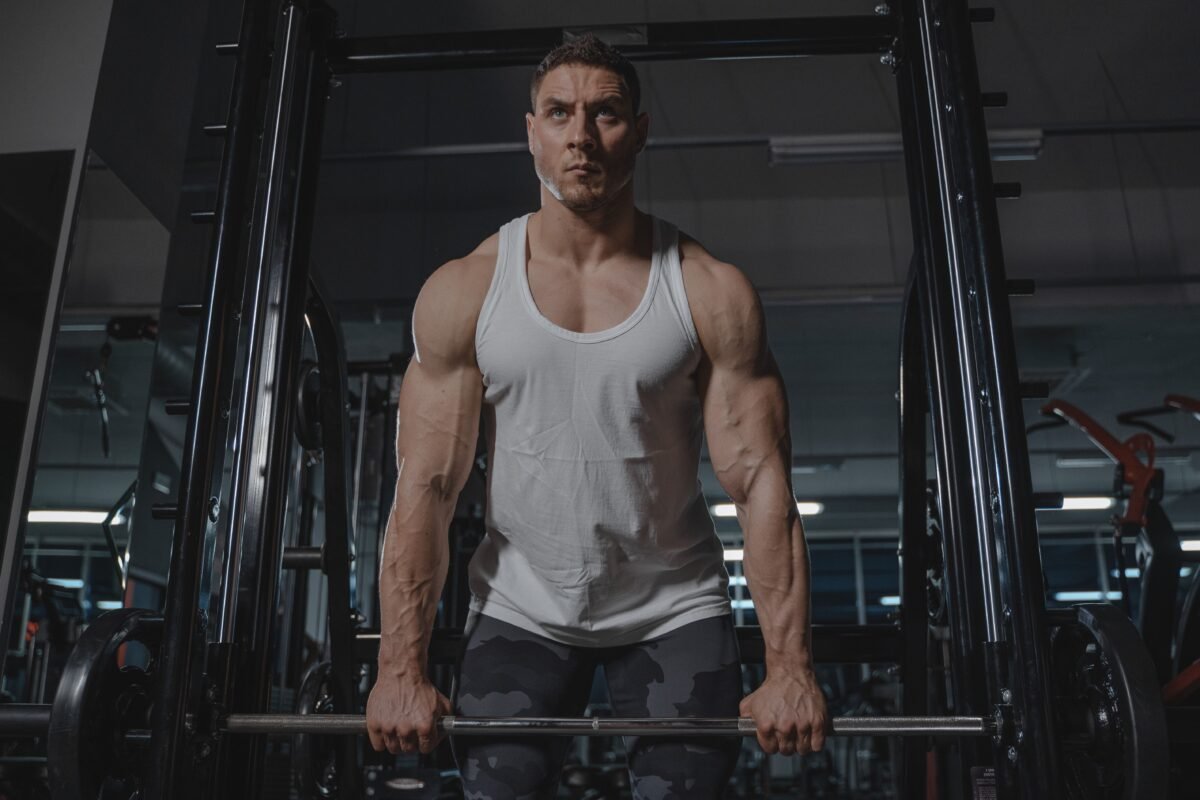
Most people get good results from about 10 to 20 hard working sets per workout, depending on the split, with no more than roughly 8 to 12 hard sets for any one muscle in a session. how many sets per workout Beginners can start with 8 to 15 total sets, while experienced lifters usually need more, spread across the week.
| Level | Total working sets per workout | Sets per exercise | Sets per muscle per session | Sets per muscle per week |
|---|---|---|---|---|
| Beginner (up to about 6 to 12 months of consistent training) | 8 to 15 | 2 to 3 | 3 to 6 | 6 to 10 |
| Intermediate (about 1 to 3 years) | 12 to 20 | 2 to 4 | 4 to 8 | 10 to 16 |
| Advanced (3+ years) | 15 to 25, usually on a split routine | 2 to 5 | 5 to 10 | 12 to 20, individual |
These are starting points, not laws. Training history, exercise choice, how many sets per workout effort, sleep, food and stress all change what is right for you, so treat the numbers as a first draft and adjust using the progress and recovery checks later in this guide.
Three Numbers People Mix Up
The biggest source of bad advice is quoting one number as if it answers all three questions.
| What is being counted | Typical range | Why it matters |
|---|---|---|
| Sets per exercise | 2 to 4 | Controls how much work you do on a single lift |
| Total working sets per workout | 8 to 25 | Controls how long and tiring the session is |
| Sets per muscle per week | 6 to 20 | Controls how much total growth stimulus a muscle gets |
A workout of 20 sets sounds like a lot, how many sets per workout but if those sets cover chest, back, legs and shoulders, each muscle only gets a handful. In the same way, 15 sets for one muscle in a single session is likely too much, even if the weekly total looks reasonable.
What Is a Set, and What Counts?
A rep is one complete movement of an exercise. A set is a group of reps done back to back before you rest.
Not every set counts the same way:
- Warm-up sets prepare your muscles and joints with lighter weights. They do not count toward your training volume.
- Working sets are the challenging sets you do with your planned weight. These are the ones to count.
- Hard sets are working sets taken close enough to failure that they are genuinely demanding. Most research on volume is built around this idea.
For most lifters, a good working set ends with about one to three reps left in the tank, how many sets per workout often called reps in reserve. You do not need to reach complete failure on every set. In fact, grinding every set to failure can add fatigue without adding much benefit, particularly on heavy compound lifts.
Direct and indirect sets
Compound lifts train more than one muscle. A bench press works the chest directly, but it also works the triceps and front shoulders. Researchers often count these as indirect sets, how many sets per workout and some count them at half value (0.5 of a set) when adding up weekly volume. You do not need to be this exact. Just remember that if you press heavily, your triceps are already getting work.
How Many Sets Should Beginners Do Per Workout?
Beginners need less than they think. A new lifter responds to almost any sensible training, and the main job is to learn technique and build consistency.
- Total sets per workout: 8 to 15 working sets
- Sets per exercise: 2 to 3
- Number of exercises: 4 to 6, mostly compound lifts
- Frequency: 2 to 3 full-body sessions per week
- Effort: leave 2 to 3 reps in reserve while you learn each movement
A good beginner workout might include a squat variation, how many sets per workout a push, a pull, a hip hinge and one core or accessory exercise, with 2 to 3 sets each. Add weight or reps slowly. Doing more sets will not fix poor technique, and extra volume early on mostly adds soreness.
How Many Sets Should Intermediate and Advanced Lifters Do?
As you adapt, the same workout stops producing as much progress, how many sets per workout and you usually need more weekly volume, better exercise choice and smarter recovery. But more is not automatically better, and the right move is often to add one set at a time rather than doubling everything.
Intermediate lifters (about 1 to 3 years)
- 12 to 20 working sets per workout
- 10 to 16 weekly sets for muscles you want to grow
- Often 3 to 4 sessions per week, either full-body or upper/lower
Advanced lifters (3+ years)
- 15 to 25 working sets per workout, usually on a split
- 12 to 20 or more weekly sets for priority muscles, spread over multiple sessions
- More attention to fatigue management, such as planned lighter weeks
Advanced lifters often get more from changing how they train than from simply adding sets: how many sets per workout better exercise selection, tighter technique, more consistent effort, longer rest on heavy lifts and better recovery.
How Many Sets Per Exercise Are Enough?
For most exercises, 2 to 4 hard sets is the sweet spot.
- Main compound lifts (squat, bench press, deadlift variations, overhead press, rows): 3 to 5 sets for strength work, 2 to 4 for muscle growth
- Accessory compound lifts (lunges, dips, pull-ups, hip thrusts): 2 to 4 sets
- Isolation exercises (curls, lateral raises, leg extensions): 2 to 3 sets
If you are already doing three solid sets on a lift and your performance drops hard on the fourth, how many sets per workout the extra set is probably doing more harm than good. It is usually smarter to add a different exercise for the same muscle than to pile more sets on a single lift.
How Many Sets Per Muscle Group Per Week?
Research on muscle growth consistently points to weekly volume as a key driver, and larger analyses suggest the relationship is graded: more sets tend to produce more growth, but each extra set adds a bit less than the one before it. how many sets per workout One widely cited review found that doing roughly 10 or more weekly sets per muscle group was associated with greater gains than lower volumes. Later, larger analyses found continued benefits with diminishing returns rather than a hard ceiling.
A practical way to use this:
- Maintenance: about 4 to 6 weekly sets per muscle
- Steady growth: about 8 to 14 weekly sets per muscle
- Higher-volume phases for priority muscles: about 14 to 20 weekly sets, if you are recovering well
Spread your sets across the week
Training a muscle two or more times per week makes it easier to reach your weekly target without any single session getting too long. For example, how many sets per workout 12 weekly chest sets are easier to handle as 6 on Monday and 6 on Thursday than as 12 in one go. Research has found that once weekly volume is matched, extra training days make little difference for muscle size, but spreading sets can improve the quality of each set and reduce fatigue in a single session.
A quick weekly tally
Suppose you do 3 sets of bench press, 3 sets of incline dumbbell press and 3 sets of overhead press twice a week:
- Chest: 12 direct sets, plus a share from overhead pressing
- Front shoulders: 6 direct sets plus indirect work from the presses
- Triceps: no direct sets, but meaningful indirect work
If you counted indirect sets at half, your triceps would already be near 9 fractional sets per week from pressing alone.
How Many Sets for Different Fitness Goals?
| Goal | Typical reps | Sets per exercise | Rest between sets | Effort |
|---|---|---|---|---|
| Muscle growth | 6 to 20 | 2 to 4 | 1 to 3 minutes | Mostly 1 to 3 reps in reserve |
| Strength | 1 to 6 on main lifts | 3 to 5 | 2 to 5 minutes | Heavy but technically clean; not every set to failure |
| Muscular endurance | 15 or more | 2 to 3 | 30 to 90 seconds | Moderate to hard |
| General fitness | 8 to 15 | 2 to 3 | 1 to 2 minutes | Moderate |
Sets for muscle growth
Aim for enough hard sets per muscle each week and keep each session manageable. Many rep ranges build muscle as long as the sets are close enough to failure to be challenging. Most lifters do best in the 6 to 20 rep range, and about 8 to 12 reps is a convenient middle.
Sets for strength
Strength is a skill as well as a muscle size issue, so practice matters. Heavy sets on your main lifts, usually 3 to 5, with long rests work well. The research on strength suggests diminishing returns arrive sooner than for muscle size, how many sets per workout so very high set counts are often not needed. Quality beats quantity: crisp reps, good technique and consistent progression.
Sets for endurance and general fitness
If your goal is to stay healthy, move well and feel stronger, 2 to 3 sets of 8 to 15 reps across the main movement patterns, two to three times a week, is plenty. You do not need a bodybuilder’s volume to benefit.
Do More Sets Always Build More Muscle?
No. More sets tend to help up to a point, then add less and less, and eventually can cost you more in fatigue than they give back. A 2025 analysis of per-session volume suggested that, for muscle growth, how many sets per workout extra sets in a single workout stopped producing a clearly detectable extra benefit at roughly 11 fractional sets for a muscle in one session, with strength gains levelling off at an even lower number. These are model estimates, not rules, but they match what many coaches see: after a certain point, it is smarter to spread sets across more sessions than to stack them in one.
Signs you have passed the point of useful volume in a session:
- Your reps and technique drop sharply
- You are doing sets mostly because the plan says so
- Your workouts are getting very long, with performance falling
- You feel run down the next day or the next week
How Long Should You Rest Between Sets?
Rest changes how many quality sets you can do, so it affects your answer to the sets question.
- Heavy compound lifts: about 2 to 5 minutes
- Moderate compound lifts: about 1.5 to 3 minutes
- Isolation lifts: about 1 to 2 minutes
- Endurance work: 30 to 90 seconds
If you cut rest too short, your later sets will be weaker and you will not be able to do as many hard sets. how many sets per workout If the session is taking too long, reduce the number of exercises or use supersets for non-competing muscles, such as a chest press paired with a row.
How Long Will a Workout Take?
A rough rule: each working set, including rest, takes about 2 to 4 minutes.
| Working sets | Approximate time (plus warm-up) |
|---|---|
| 10 | 25 to 40 minutes |
| 15 | 40 to 60 minutes |
| 20 | 55 to 80 minutes |
| 25 | 70 to 100 minutes |
If you only have 45 minutes, a smart 12 to 15 set workout will beat a rushed 25-set session.
Example Workouts With Different Set Volumes
Full-body workout, 3 days per week (about 15 working sets)
| Exercise | Sets x reps |
|---|---|
| Squat or leg press | 3 x 6 to 10 |
| Bench press or push-up | 3 x 6 to 10 |
| Row or pull-down | 3 x 8 to 12 |
| Romanian deadlift | 2 x 8 to 10 |
| Overhead press | 2 x 8 to 12 |
| Plank or core exercise | 2 x 30 to 60 seconds |
Over a week, each major muscle receives roughly 6 to 12 sets once indirect work is included, how many sets per workout a solid starting point for a beginner or someone returning to training.
Upper/lower split, 4 days per week (about 13 to 16 sets per session)
| Day | Exercises (sets) |
|---|---|
| Upper A | Bench press (3), row (3), overhead press (2), lat pulldown (3), triceps pushdown (2), curl (2) |
| Lower A | Squat (3), Romanian deadlift (3), leg press (2), leg curl (2), calf raise (3) |
| Upper B and Lower B | Repeat the pattern with different exercise variations |
Each muscle gets two sessions per week, so weekly volume can reach 10 to 16 sets without any single workout becoming excessive.
Short workout, 30 minutes (about 8 to 10 sets)
Pick one lower-body compound, one push, how many sets per workout one pull and one accessory, with 2 to 3 sets each. A short, consistent workout is far better than a long one you skip.
How to Adjust Your Sets Using Progress and Recovery
Instead of guessing, use what your body tells you.
- Start at the low end of your range for 2 to 4 weeks.
- Track your lifts. If weights or reps are rising, you are on track.
- Add one set to one or two muscles if you are progressing, recovering well and wanting more.
- Hold steady if progress is slow but sleep, mood and soreness are good, and check effort and exercise quality before adding volume.
- Cut back by a set or two if your performance falls for two or more sessions, you feel run down or your joints hurt.
- Plan a lighter week every 4 to 8 weeks if you train hard, reducing sets by about a third to a half.
Signs You Are Doing Too Many or Too Few Sets
| Sign | Too many sets | Too few sets |
|---|---|---|
| Performance | Reps and weights falling over several sessions | Not progressing; every workout feels easy |
| Soreness and fatigue | Constant heavy soreness, lingering tiredness | Little to no muscle fatigue the next day |
| Motivation | Dreading sessions, poor sleep | Bored, restless, finishing with lots left |
| Joints | Aches, nagging pain | None |
| Fix | Cut 1 to 3 sets per muscle or add a rest day | Add 1 set per muscle per week |
Persistent pain, dizziness, chest pain or sharp joint pain are not normal training fatigue. Stop and speak to a doctor or qualified professional.
Common Mistakes to Avoid
- Counting warm-up sets as training volume. Count working sets only.
- Copying a pro’s program. Advanced lifters often use more sets, better recovery and sometimes support you do not have.
- Treating 15 to 25 sets as universal. The right number depends on your split, experience and goal.
- Doing all your weekly sets for one muscle in one day. Spread them out.
- Taking every set to failure. It increases fatigue without guaranteed extra benefit.
- Adding sets instead of fixing technique or effort. Better quality often beats extra quantity.
- Changing everything at once. Change one thing at a time so you know what works.
- Ignoring sleep and food. Recovery decides how much volume you can use.
What the Research Says, and Its Limits
| Finding | Evidence | Limits |
|---|---|---|
| More weekly sets tend to build more muscle | Several meta-analyses show a graded relationship | Returns diminish; not every study counts sets the same way |
| Strength gains plateau at lower volumes than muscle size | Large meta-regressions show stronger diminishing returns for strength | Mostly short studies, often 8 to 12 weeks |
| Frequency matters less than weekly volume for muscle size | Reviews find small or inconsistent effects once volume is equal | Spreading sets still helps quality and recovery |
| Training close to failure helps growth | Meta-regressions suggest effort matters more for size than for strength | Estimates of proximity to failure are often approximate |
Most studies involve healthy adults over weeks to months and use averages, so your individual response will vary. Use the research as a map, not a rulebook.
Frequently Asked Questions
How many sets per workout should a beginner do?
About 8 to 15 working sets, with 2 to 3 sets per exercise, two to three times a week.
Is 10 sets per workout enough?
Yes, especially for beginners or full-body workouts. If the sets are hard and you train consistently, 10 sets can drive progress.
Is 20 sets per workout too much?
Not necessarily. It depends on the muscles trained. 20 sets spread across several muscles is common for advanced lifters, but 20 sets for one muscle in a single session is usually excessive.
How many sets should I do per exercise?
Typically 2 to 4 hard sets. Use more for main strength lifts and fewer for isolation work.
Are 3 sets or 4 sets better for muscle growth?
Both work. Three is a good default, and a fourth set can help if you are recovering well and still performing well on it.
How many sets per muscle group should I do each week?
Typically 2 to 4 hard sets. Use more for main strength lifts and fewer for isolation work.
Are 3 sets or 4 sets better for muscle growth?
Both work. Three is a good default, and a fourth set can help if you are recovering well and still performing well on it.
Key Takeaways
- A good starting point is 10 to 20 hard working sets per workout, depending on your split
- Separate three numbers: sets per exercise (2 to 4), sets per workout, and sets per muscle per week (about 8 to 14 for most people)
- More sets help up to a point, then returns shrink; strength plateaus sooner than muscle size
- Count working sets only, and treat indirect sets from compound lifts as partial credit
- Adjust one variable at a time using your progress, recovery and sleep