What Foods Have Vitamin D? Complete List with Amounts (IU and mcg)


What Foods Have Vitamin D?
What foods have vitamin D? Very few foods contain it naturally in useful amounts. The best natural sources are cod liver oil, fatty fish (trout, salmon, sardines, herring, mackerel), UV-exposed mushrooms, egg yolks and beef liver. Milk, plant milks, breakfast cereals, orange juice, tofu and spreads contain vitamin D only when fortified, and fortification rules differ by country. Fruits, vegetables, nuts, grains and legumes contain almost none. what foods have vitamin d One serving of cooked trout or salmon can supply most of a day’s needs; an egg supplies only about 6% of the label Daily Value.
The short list, strongest to weakest:
- Cod liver oil (1 tablespoon): about 1,360 IU (34 mcg)
- Trout and salmon (3 oz / 85 g cooked): about 570 to 645 IU (14 to 16 mcg)
- UV-exposed mushrooms (½ cup): about 366 IU (9 mcg)
- Fortified milk or plant milk (1 cup): about 100 to 144 IU (2.5 to 3.6 mcg)
- Egg, sardines, beef liver, canned light tuna: roughly 40 to 46 IU (1 to 1.2 mcg) per typical serving
Unit converter: 1 mcg (µg) of vitamin D = 40 IU, so 10 mcg = 400 IU and 15 mcg = 600 IU.
How Much Vitamin D Do You Need Each Day?

Different health bodies publish slightly different numbers, what foods have vitamin d which is why you may see 400 IU in one place and 600 IU in another. Neither is wrong; they come from different expert panels and assumptions about sunlight.
| Group | US (NIH) | UK (NHS / SACN) |
|---|---|---|
| Babies 0 to 12 months | 400 IU (10 mcg) | 8.5 to 10 mcg (340 to 400 IU) as a supplement for breastfed babies |
| Children and adults 1 to 70 | 600 IU (15 mcg) | 400 IU (10 mcg) from age 4 |
| Adults 71 and over | 800 IU (20 mcg) | 400 IU (10 mcg) |
| Pregnancy and breastfeeding | 600 IU (15 mcg) | 400 IU (10 mcg) |
| Tolerable upper limit (adults) | 4,000 IU (100 mcg) | 100 mcg (4,000 IU) |
These amounts are meant to cover people who get little sun. what foods have vitamin d If you spend time outdoors in strong sunlight your skin makes a large share of your vitamin D, and food matters less. We cover that balance near the end.
Foods With Vitamin D: Full Chart (IU, mcg, % DV)

Values below follow the US National Institutes of Health Office of Dietary Supplements (NIH ODS) food tables, which draw on USDA FoodData Central. Real products vary by brand, fish species, what foods have vitamin d farming method and country, so treat them as good estimates and check labels where you can.
| Food | Serving | IU | mcg | % DV | Type |
|---|---|---|---|---|---|
| Cod liver oil | 1 tablespoon | 1,360 | 34 | 170% | Natural (supplement-like) |
| Trout, rainbow, farmed, cooked | 3 oz (85 g) | 645 | 16.2 | 81% | Natural |
| Salmon, sockeye, cooked | 3 oz (85 g) | 570 | 14.2 | 71% | Natural |
| Swordfish, cooked | 3 oz (85 g) | 566 | 14.1 | 71% | Natural (see mercury note) |
| Mushrooms, white, UV-exposed | ½ cup, sliced | 366 | 9.2 | 46% | Natural (UV-treated) |
| Plant milks (soy, almond, oat), fortified | 1 cup | 100 to 144 | 2.5 to 3.6 | 13 to 18% | Fortified |
| Cow’s milk, 2%, fortified | 1 cup | 120 | 2.9 | 15% | Fortified |
| Orange juice, fortified | 1 cup | about 100 | about 2.5 | about 13% | Fortified (varies) |
| Breakfast cereal, fortified | ¾ cup | 80 | 2.0 | 10% | Fortified |
| Sardines, canned in oil, drained | 2 sardines | 46 | 1.2 | 6% | Natural |
| Egg, large, scrambled (yolk contains it) | 1 egg | 44 | 1.1 | 6% | Natural |
| Beef liver, braised | 3 oz (85 g) | 42 | 1.0 | 5% | Natural |
| Tuna, light, canned in water | 3 oz (85 g) | 40 | 1.0 | 5% | Natural |
| Cheddar cheese | 1.5 oz (42 g) | 17 | 0.4 | 2% | Natural (trace) |
| Mushrooms, portabella, not UV-exposed | ½ cup | 4 | 0.1 | 1% | Natural (trace) |
| Chicken breast, roasted | 3 oz (85 g) | 4 | 0.1 | 1% | Natural (trace) |
Two reading tips. First, a 3 oz serving is about the size of a deck of cards; what foods have vitamin d if you eat 150 g, roughly double the numbers. Second, fortified foods are only as good as their label: the same product can contain different amounts in different countries.
Best Natural Food Sources of Vitamin D
Cod liver oil
Cod liver oil is the most concentrated food-based source, with a single tablespoon covering well over a full day of the US Daily Value. That strength is also its risk: it is rich in preformed vitamin A, and too much vitamin A over time can harm the liver and bones, and can harm an unborn baby. Stick to the dose on the label, what foods have vitamin d do not combine it with other vitamin A or multivitamin products without checking totals, and avoid it in pregnancy unless your doctor advises it. This is also the reason UK health advice says pregnant women should not take cod liver oil.
Fatty fish: trout, salmon, mackerel, herring and sardines
Oily fish are the best everyday natural source. what foods have vitamin d Farmed rainbow trout and sockeye salmon each provide roughly 570 to 645 IU in a 3 oz portion. Fresh Atlantic herring and mackerel also provide useful amounts, and canned sardines and canned light tuna give smaller but convenient doses.
Wild versus farmed salmon. Wild salmon has traditionally been the higher-vitamin-D choice, while farmed salmon has varied widely depending on the feed. Both are good sources, but numbers on a farmed fillet can be lower than the figures above, so do not assume one number fits every fillet.
Fresh versus canned. Canned salmon and sardines (especially with soft bones) keep much of their vitamin D and add calcium. what foods have vitamin dCanned light tuna is a modest source, and albacore (white) tuna is higher in mercury.
Pickled and smoked fish. Pickled herring and smoked fish can contain vitamin D but are often very high in sodium. Enjoy them occasionally rather than as a daily vitamin D plan.
Egg yolks
The vitamin D in an egg is in the yolk, so egg-white omelettes provide almost none. what foods have vitamin d One large egg gives about 44 IU. Eggs from hens fed vitamin D-enriched feed or kept outdoors in sunlight can contain noticeably more, and some cartons state this on the label.
Beef liver
Liver provides about 42 IU in a 3 oz serving, so it is not a vitamin D powerhouse. what foods have vitamin d It is, however, extremely high in vitamin A. Pregnant women in the UK are advised to avoid liver, and everyone else should keep portions occasional rather than weekly or daily.
UV-exposed mushrooms
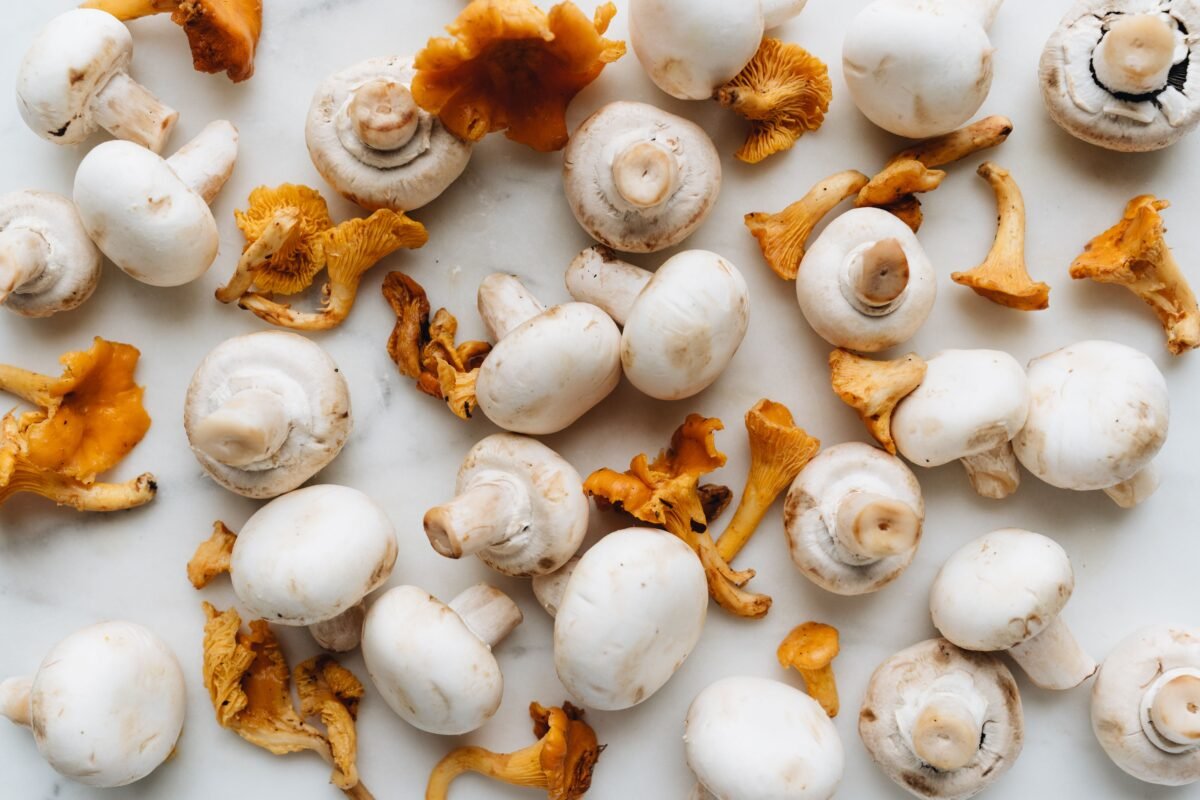
Mushrooms are the only common plant-like food that can supply real vitamin D, and only after ultraviolet light exposure. Like human skin, mushrooms make vitamin D (mostly D2) when exposed to UV. what foods have vitamin d Ordinary mushrooms grown in the dark contain only a trace (about 4 IU in ½ cup of portabella), while UV-treated white mushrooms provide around 366 IU. We cover how to find or make them in the vegetarian section.
Vitamin D Foods for Vegetarians and Vegans

If you avoid fish and meat, you can still build a decent food-based intake, what foods have vitamin d but you will almost always rely on fortified products and UV mushrooms.
Vegetarians (eggs and dairy included):
- Egg yolks (about 44 IU each)
- Fortified milk and yogurt, where available in your country
- Fortified cereals and spreads
- UV-exposed mushrooms
Vegans:
- UV-exposed mushrooms: the strongest plant-based food source (about 9 mcg per ½ cup).
- Fortified plant milks: soy, almond, oat and rice milks fortified with vitamin D provide about 100 to 144 IU per cup. Shake the carton, because added vitamins can settle.
- Fortified tofu: only some brands are fortified; the amount depends on the product, so read the label.
- Fortified cereals and orange juice: helpful, but check sugar content.
- Vegan D3 supplements: most D3 supplements come from sheep’s wool lanolin, but vegan D3 made from lichen is widely available. Plant-based D2 is another option.
Common vegan foods such as lentils, chickpeas, nuts, seeds, rice, spinach and broccoli contain essentially no vitamin D.
Fortified Foods With Vitamin D

Fortified foods have vitamin D added during manufacturing. what foods have vitamin d They are often the largest contributors to vitamin D intake in countries that fortify, and they give people a practical alternative to fish.
- Milk: about 120 IU per cup in the US; many countries do not fortify milk at all (see the country table).
- Plant milks: about 100 to 144 IU per cup when fortified.
- Breakfast cereals: about 80 IU per ¾ cup, but this varies from none to 100% DV, so use the label.
- Orange juice: some brands add about 100 IU per cup.
- Tofu and yogurt: only specific fortified products.
- Margarine and fat spreads: commonly fortified in several countries.
- Infant formula: fortified by regulation in most countries.
How to read the label. Look for “vitamin D”, “cholecalciferol” (D3) or “ergocalciferol” (D2). US labels give mcg and % DV; UK and EU labels usually give µg. Multiply µg by 40 to get IU.
Vitamin D Foods by Country (US, UK, India, Pakistan, Australia)
Most articles are written for one country and quietly assume the rest of the world eats the same way. Fortification policy is different almost everywhere, what foods have vitamin d so a food that is a reliable source in one place may contain none in another. Rules change, so confirm on your local label.
| Country or region | What is typically fortified |
|---|---|
| United States | Milk is widely fortified (voluntary but near-universal for cow’s milk); many plant milks, cereals, orange juices and some yogurts |
| Canada | Milk and margarine are required to be fortified; plant milks, some cereals and juices too |
| United Kingdom | Cow’s milk is not fortified; some cereals, spreads and plant milks are fortified voluntarily; infant formula is fortified |
| European Union | Varies by country; Finland has a national policy fortifying milk and spreads; many others fortify little |
| India | Fortification is largely voluntary; some milk, edible oil and cereal brands are fortified; paneer, ghee, buttermilk and plain curd are not reliable sources |
| Pakistan | Vegetable ghee and cooking oil are fortified with vitamins A and D under national fortification standards; milk is generally not fortified; check brand labels |
| Australia and New Zealand | Margarine is required to be fortified; some milks and cereals are voluntarily fortified |
Foods Often Wrongly Listed as Vitamin D Sources
Many blogs include foods that sound healthy but contribute almost nothing. what foods have vitamin d This matters because someone who relies on them can believe they are covered when they are not.
- Fruits and vegetables: oranges, bananas, carrots, spinach and broccoli have no vitamin D. Orange juice counts only when fortified. There is no such thing as a naturally vitamin D-enriched fruit.
- Ghee (desi/butter ghee), butter, paneer, cheese and buttermilk: these contain at most trace amounts (cheddar gives about 17 IU in 1.5 oz). Vegetable or vanaspati ghee is a different product and may be fortified by regulation in some countries, so read the label rather than assume.
- Red meat and chicken: only a few IU per serving.
- Nuts, seeds, grains and legumes: none unless fortified.
- Egg whites: no vitamin D, because it is stored in the yolk.
- Plant milks without fortification: none. Check the label.
Vitamin D2 vs D3 in Food
There are two main dietary forms. Vitamin D3 (cholecalciferol) occurs in animal foods: fish, egg yolks, liver and dairy. Vitamin D2 (ergocalciferol) is made by fungi and yeast, and is the main form in UV-exposed mushrooms and in many vegan fortified foods.
Both raise vitamin D levels in the blood. Several trials suggest D3 raises and maintains blood levels somewhat more effectively than D2, particularly in large single doses, what foods have vitamin d but at daily food-level amounts the difference is small. For most people the practical advice is simple: eat what fits your diet and prefer foods with a clear label.
How to Get More Vitamin D From Food
- Eat vitamin D with some fat. Vitamin D is fat-soluble, and studies suggest absorption is better when taken with a meal containing fat. Salmon, eggs and cod liver oil already bring their own fat; for mushrooms or fortified cereal, add olive oil, nuts, yogurt or milk.
- Choose gentle cooking. Research on cooking losses is limited and varies by food, but baking, grilling and boiling generally keep most of the vitamin D, while frying can reduce it more. Do not worry about small losses; eating the food matters more than perfecting the method.
- Mind storage. Vitamin D is fairly stable during normal storage, and canned fish retains most of it. If fish is packed in oil, a little may end up in the oil, so use it in a dressing or sauce if you like the taste.
- Put your mushrooms in the sun. Slice white or brown mushrooms, place them gill-side up in strong midday sunlight for roughly 15 to 60 minutes (longer in weaker sun), and use them soon after. This can raise their vitamin D2 substantially. In shops, look for packs labelled “UV-exposed” or “high in vitamin D” and check the mcg on the panel.
- Rotate your fish. Mix salmon, trout, sardines and canned tuna through the week rather than relying on one species.
- Use fortified staples smartly. A glass of fortified milk or plant milk plus fortified cereal provides about 200 IU before you have even started lunch.
Who Needs Extra Attention?
Food alone often falls short, and some people are at higher risk of low vitamin D:
- Older adults, because skin makes less vitamin D with age and appetite may be smaller.
- People with darker skin, because more melanin reduces vitamin D production from sunlight.
- People with little sun exposure, including those who cover most of their skin, work indoors, live far from the equator or spend winter in northern latitudes. In the UK, for example, sunlight from about October to March is generally too weak for the skin to make enough.
- People living with obesity, because vitamin D can be stored in body fat and less may circulate in the blood.
- People with gut or absorption conditions such as coeliac disease, Crohn’s disease or after weight-loss surgery.
- People with kidney or liver disease, or taking some long-term medicines (ask your pharmacist).
- Pregnant and breastfeeding women. Follow your country’s guidance and avoid liver and cod liver oil where advised.
- Breastfed babies. Breast milk is low in vitamin D, and most health authorities recommend a daily infant supplement. Ask your paediatrician.
Safety, Upper Limits and Mercury or Vitamin A Warnings
It is very hard to overdose on vitamin D from food. what foods have vitamin d Toxicity almost always comes from high-dose supplements taken over long periods. Too much vitamin D raises blood calcium and can cause nausea, vomiting, weakness, frequent urination and kidney problems.
- Upper limit: 4,000 IU (100 mcg) per day for adults, from all sources combined. Lower limits apply to children: 1,000 to 1,500 IU for babies and 2,500 to 3,000 IU for toddlers and young children.
- Vitamin A: cod liver oil and liver contain preformed vitamin A. Avoid both in pregnancy unless your doctor says otherwise, and do not stack them with other vitamin A sources.
- Mercury: salmon, trout, sardines, herring and canned light tuna are lower-mercury choices. Swordfish, king mackerel, shark, marlin and bigeye tuna are higher in mercury, and are on the avoid list for pregnant women, breastfeeding women and young children in the US. This is why swordfish appears in the chart but is not recommended as a regular food.
- Oily fish limits: UK guidance suggests up to four portions of oily fish a week for most adults and up to two for pregnant women and girls.
- Sodium: pickled, smoked and canned fish can be salty. Choose water-packed or low-salt options if you have high blood pressure.
- Allergies: fish, eggs, milk and soy are common allergens; do not use them just for vitamin D if you react to them.
One-Day Vitamin D Meal Ideas
These examples use the chart values and are approximate. They show how realistic meals add up against the 600 to 800 IU range.
Omnivore day (about 820 IU, 20 mcg)
- Breakfast: 2 scrambled eggs (about 88 IU) with a glass of fortified milk (about 120 IU)
- Lunch: 2 sardines on wholegrain toast (about 46 IU)
- Dinner: baked sockeye salmon, 3 oz, with roasted vegetables and rice (about 570 IU)
Vegetarian day (about 650 IU, 16 mcg)
- Breakfast: fortified cereal (about 80 IU) with a glass of fortified milk (about 120 IU)
- Lunch: omelette with 2 eggs (about 88 IU) and a side of mushrooms
- Dinner: stir-fry with ½ cup UV-exposed mushrooms (about 366 IU)
Vegan day (about 670 IU, 17 mcg)
- Breakfast: fortified cereal (about 80 IU) with fortified soy milk (about 120 IU)
- Lunch: UV-exposed mushroom and spinach wrap (about 366 IU)
- Snack: a glass of fortified orange juice (about 100 IU)
- Dinner: tofu curry (check label for fortification, not counted here)
If brands differ, your numbers will too. The goal is to see how a normal day can reach 400 to 800 IU, not to hit an exact number.
Food, Sun or Supplements? Getting the Balance Right
Vitamin D is unusual because food is not its main source for most people. Research on food composition has long shown that natural dietary sources are limited, what foods have vitamin d which is why sunlight and supplements are the other two pillars.
- Food: the safest, most reliable base. Plan around oily fish, eggs, UV mushrooms and fortified staples.
- Sunlight: brief, regular exposure of the face, arms or legs in strong sun can supply a large amount of vitamin D, but the amount depends on skin tone, latitude, season, time of day and sunscreen. Short exposure of bare skin without burning is the goal; do not seek tanning or use UV lamps, which raise skin cancer risk. Do not skip sunscreen for long periods outdoors.
- Supplements: a sensible option from autumn to spring in northern countries, for people with limited sun, or when a doctor recommends it. A daily dose of 400 to 1,000 IU is common, but ask a healthcare professional what suits you.
- Blood test: if you are unsure, a 25-hydroxyvitamin D (25(OH)D) test measures your level. Many labs treat below 12 ng/mL (30 nmol/L) as deficient, and some consider levels under 20 ng/mL (50 nmol/L) insufficient. Interpretation depends on your doctor and your lab’s ranges.
FAQs
What foods have vitamin D naturally?
Oily fish (trout, salmon, mackerel, herring, sardines), cod liver oil, egg yolks, beef liver and UV-exposed mushrooms are the main natural sources. Most other foods contain only trace amounts.
Which food has the most vitamin D?
Cod liver oil has the most, about 1,360 IU per tablespoon. Among regular foods, cooked rainbow trout (about 645 IU in 3 oz) and cooked sockeye salmon (about 570 IU in 3 oz) lead the list.
What foods have vitamin D for vegetarians and vegans?
UV-exposed mushrooms and fortified foods such as plant milks, cereals, orange juice, spreads and some tofu. Vegetarians can also count egg yolks and fortified dairy.
Does milk have vitamin D?
Only if it is fortified. In the US and Canada most milk is fortified. In the UK, cow’s milk is not fortified. Check the label wherever you live.
Do eggs have vitamin D?
Yes, in the yolk. One large egg has about 44 IU (1.1 mcg), roughly 6% of the label Daily Value.
Can I get enough vitamin D from food alone?
It is possible but not easy. Eating oily fish a few times a week and using fortified foods can reach the recommended amounts, but many people also need sunlight or supplements, especially in winter or if they eat little fish.
Is it possible to get too much vitamin D from food?
It is very unlikely from food alone. Toxicity is usually caused by high-dose supplements. The adult upper limit is 4,000 IU (100 mcg) per day from all sources.
How many IU is 10 mcg?
400 IU. The rule is 1 mcg = 40 IU.
Conclusion
So, what foods have vitamin D? The honest answer is a short list: oily fish, cod liver oil, UV-exposed mushrooms, egg yolks and liver provide it naturally, and fortified milk, plant milks, cereals, juices and spreads add more where fortification exists. Ghee, paneer, buttermilk, fruit and vegetables do not belong on a vitamin D list, and the foods that count in your country may not be the ones that count in someone else’s.
Build your plan around a few strong foods, check labels for fortification, use sensible sunlight, and speak to a healthcare professional about a blood test or supplement if you are in a higher-risk group. Small, steady choices add up.