


What Is Telemedicine?
Telemedicine is the delivery of medical care at a distance using technology, such as video calls, phone calls, secure messaging, photos or home-monitoring devices. A clinician can assess, advise, diagnose or monitor a patient without both people being in the same room. what is telemedicine It does not replace all in-person care, but it can make many kinds of care easier to reach.
A simple example: instead of travelling to a clinic for a follow-up on a skin condition, you have a video appointment, show the affected area to the camera and the clinician adjusts your treatment. Another example: a person with high blood pressure measures it at home with a connected device, and the readings are reviewed by their care team.
This guide explains how telemedicine works, the main types, who it suits, benefits and limitations, how it differs from telehealth, how to prepare for an appointment, what to know about privacy, what is telemedicine costs and prescriptions, and, importantly, when you should choose in-person or emergency care instead.
How Does Telemedicine Work?
Although services differ, most telemedicine care follows a similar path.
- You request or book a visit. This may be through a clinic’s website, a patient portal, an app, a phone line or a referral from your doctor.
- You complete basic steps. You may fill in a health questionnaire, confirm your identity, give consent to remote care and sometimes upload relevant information such as photos or test results.
- You connect at the agreed time or send information. In a live visit, you join a video or phone call. In some services you send a message or images and receive a reply later.
- The clinician assesses and advises. They ask questions, may ask you to show a symptom or do a simple movement, review your records and discuss options. They may give advice, arrange tests, refer you to another service or, where permitted, prescribe medication.
- Follow-up is arranged. This could be a written summary, a message, a test appointment, an in-person visit or another virtual check-in.
Behind the scenes, services use secure platforms intended to protect health information. what is telemedicine Quality, rules and the platforms used vary, which is why it matters to choose a reputable provider (covered below).
What Are the Main Types of Telemedicine?

Clinical references commonly describe three broad types. Real services often combine them.
| Type | How it works | Typical examples | Best for | Main limits |
| Live (synchronous) consultation | Patient and clinician interact in real time by video or phone | Follow-up visits, medication reviews, mental health therapy, minor illness assessment | Conversations, discussing results, ongoing care | Needs a reliable connection. The clinician cannot physically examine you |
| Store-and-forward (asynchronous) | Information such as photos, scans or histories is sent and reviewed later | Skin photos reviewed by a dermatologist, images or test results sent to a specialist, secure messages | Non-urgent questions, specialist opinions, convenience across time zones | Slower. Not suitable for urgent problems. Image quality matters |
| Remote patient monitoring | Devices collect health data at home and share it with a care team | Blood pressure, blood sugar, weight, heart rhythm or oxygen readings | Long-term conditions needing regular tracking | Needs equipment, setup and someone to review the data. Data does not replace clinical judgement |
You may also see mobile health (mHealth), which means health apps and devices used for tracking or education. what is telemedicine Some references include it as a separate category, and the lines between categories are blurry.
Examples of Telemedicine Services
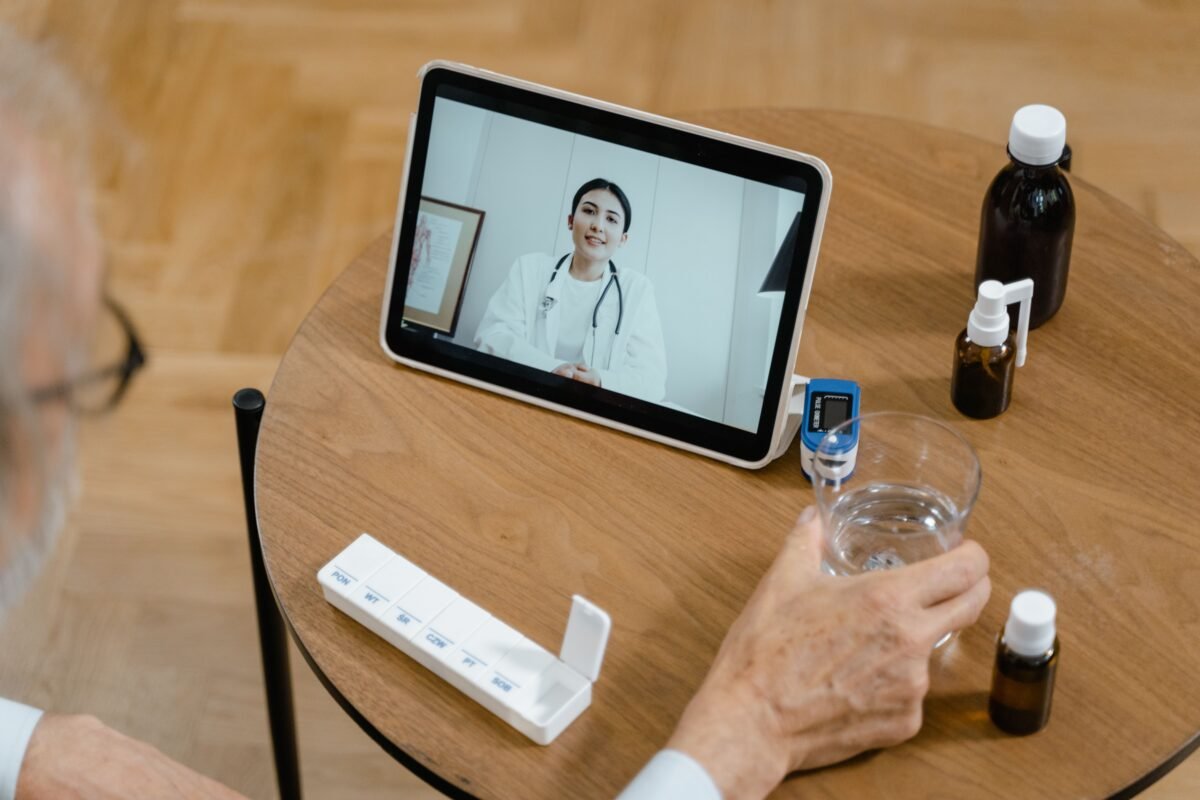
Telemedicine covers a wide range of situations. what is telemedicine Some of the most common:
- Follow-up appointments after a diagnosis or treatment, where a physical exam is not essential each time.
- Minor illnesses and everyday concerns, such as mild cold symptoms, rashes or medication questions, where a clinician decides remote assessment is appropriate.
- Mental health care, including counselling, therapy and psychiatric follow-up by video or phone.
- Chronic condition management, such as diabetes, high blood pressure, asthma or heart conditions, often using home monitoring.
- Specialist consultations, where a local clinician arranges for a distant specialist to review a case or join a visit.
- Skin, eye and imaging reviews, using photos or scans that are assessed remotely.
- Post-operative check-ins, to review healing and answer questions.
- Care for children, such as follow-ups and specialist advice, with a parent or carer present. Children’s services often adapt the format, such as a carer showing the child’s symptoms to the camera.
- Care for people with limited mobility or in remote areas, who may otherwise face long journeys.
- Support between clinicians, such as a local hospital seeking advice from a specialist elsewhere.
Whether a particular problem can be handled remotely is always the clinician’s judgement, what is telemedicine and a good service will tell you when you need to be seen in person.
Benefits of Telemedicine

Telemedicine is not better or worse than in-person care in general. what is telemedicine It is a different tool with its own strengths.
- Access. People in rural or remote areas, or those without easy transport, can reach clinicians and specialists they might otherwise struggle to see.
- Convenience. You can save travel time, parking and time away from work or caring responsibilities.
- Accessibility. It can help people with mobility challenges, chronic illness, or anxiety about attending clinics, though it is not suitable for everyone.
- Continuity. Easier follow-ups and monitoring between visits can support ongoing care.
- Reduced exposure to infections. Remote visits avoid waiting rooms when you are unwell or immunocompromised.
- Speed for some needs. Certain services can offer quicker access for non-urgent questions.
- Specialist input. Remote consultations can bring expertise to places where specialists are scarce.
- Family involvement. Relatives in different locations may be able to join a visit with your permission.
These benefits depend on the service, the person and the problem. what is telemedicine Claims that telemedicine always improves outcomes or reduces costs should be treated with caution, because results vary and evidence differs by condition and setting.
Limitations and Risks of Telemedicine
Honest information includes the downsides.
| Limitation | Why it matters | What can help |
| No hands-on examination | Some conditions need touch, listening with a stethoscope, tests or procedures | The clinician may refer you for an in-person visit. Be willing to attend if advised |
| Technology barriers | Poor connection, no suitable device or limited digital confidence can make visits difficult | Test your setup in advance, ask whether a phone visit is possible, or ask a family member or carer to help |
| Unequal access | Not everyone has reliable internet, private space or devices | Ask about alternatives, such as phone consultations or local health centre facilities |
| Privacy risks | Calls in shared spaces or unsecure platforms can expose information | Use a private room and a reputable, secure service (see below) |
| Missed or delayed diagnosis | Some conditions are hard to assess remotely | Describe symptoms fully, follow safety-net advice, and seek in-person care if symptoms worsen |
| Fragmented care | Using many different services can leave gaps in your records | Share your information with your regular doctor and keep a summary of advice and prescriptions |
| Variable quality | Not all services meet the same standards | Check how the service is regulated and whether clinicians are registered |
| Rules and coverage differ | Some services are not covered or allowed in every place or for every treatment | Check your local requirements and costs first |
Telemedicine works best when patient and clinician both understand its limits.
Telemedicine vs Telehealth: What Is the Difference?
The two terms are often used interchangeably, and different organisations define them slightly differently, so you may see them used in both ways.
- Telemedicine usually refers to remote clinical care, meaning diagnosis, treatment and monitoring delivered at a distance.
- Telehealth is the broader term. It often includes telemedicine plus other remote health services such as health education, public health information, administrative meetings, training for clinicians and wellness support.
A helpful rule of thumb: all telemedicine is part of telehealth, but not all telehealth is telemedicine. what is telemedicine For example, a video call where a doctor diagnoses and treats a condition is telemedicine. A webinar teaching healthy eating is telehealth but not clinical care.
Because definitions vary by country, regulator and insurer, what is telemedicine always check how a specific service or law defines these terms if the distinction affects you, for instance when it comes to coverage.
Who Is Telemedicine Suitable For?
Many people can use telemedicine for at least some of their care. It tends to work well when:
- The problem is mild, stable or a routine follow-up
- Most of the assessment depends on conversation or something you can show on camera
- You already have a relationship with the clinician
- You have a reliable device and connection and a private space
- Travel would be difficult, costly or tiring
It may be less suitable when:
- You have sudden, severe or worsening symptoms
- A physical examination, test or procedure is needed
- You are unable to describe or show your symptoms clearly
- You do not have a private space or reliable technology
- The clinician decides in-person assessment is safer
You are always entitled to ask for an in-person visit if you are not comfortable with a remote one, although availability and costs depend on the service and location.
How to Prepare for a Telemedicine Appointment
A little preparation makes a big difference.
Before the appointment
- Check the technology. Make sure your device camera, microphone and speakers work, the app or link is installed and your battery is charged. Join a few minutes early.
- Find a private, quiet, well-lit place. Good lighting helps the clinician see you and any symptoms.
- Check your internet. If it is unreliable, ask whether you can switch to a phone call, and keep the clinic’s number handy.
- Write down your main concerns. List symptoms, when they began, what makes them better or worse, and your top questions.
- Gather medical information. Have a list of your medicines (including doses and supplements), allergies, recent test results and relevant history.
- Prepare measurements if relevant. For example, recent blood pressure, temperature, blood sugar or weight readings, if you can take them safely.
- Have items ready. A thermometer, a pen and paper, and any devices or medicine packaging that may be needed.
- Confirm details. Check the appointment time (including time zone), who you will be speaking to and any costs.
During the appointment
- Confirm the clinician’s name and role, and check your identity details if asked.
- Describe symptoms clearly and honestly, including anything embarrassing, since clinicians have heard it before.
- Show the problem area on camera if asked, using good light and holding the camera steady.
- Ask questions, and repeat back the plan to check you have understood.
- Ask what to do if symptoms get worse and who to contact.
After the appointment
- Make a note of advice, prescriptions, tests and follow-up dates.
- Share relevant information with your regular doctor.
- Follow safety-net advice and seek in-person care if you are getting worse.
Troubleshooting Poor Connections and Technical Problems
| Problem | What to try |
| Video freezes or lags | Move closer to your router, close other apps, ask others in the home to pause streaming, or switch to audio only |
| Cannot hear or be heard | Check device volume and microphone permissions, try headphones, or dial in by phone |
| Camera not working | Check app permissions, restart the app or device, or use a different device |
| Call drops | Reconnect, or ask the service to call you by phone. Note where you got to |
| Link does not work | Contact the clinic early, and try a different browser or device |
| Not confident with technology | Ask the service whether a phone visit is possible, or ask a trusted person to help you set up |
Privacy, Security, and Consent
Health information is sensitive, so ask about how a service protects it.
- Use reputable services. Look for clinics, hospitals and providers that explain how they protect your data and who are properly regulated.
- Check the platform. Prefer services that use secure, purpose-built platforms over ordinary messaging apps for clinical information, unless your provider has told you it is appropriate.
- Protect your environment. Use a private room, headphones if others are nearby and a secure, password-protected network. Avoid public Wi-Fi where possible.
- Know what is recorded. Ask whether the visit is recorded or stored and how your records are kept.
- Understand consent. You should be told about the benefits, risks and limits of remote care and agree to proceed.
- Be cautious with links. Scammers sometimes imitate health services. Use links from official websites or appointment confirmations, and never share passwords or payment details by email or text with someone you cannot verify.
- Know your rights. Privacy and data protection laws differ between countries. Ask the service how they comply and how you can access or correct your records.
Costs, Insurance, and Prescriptions
These areas differ widely by country, insurer and service, and rules change, so the following is general guidance only.
Costs and coverage. Some telemedicine appointments are covered by public health systems or insurers, others are paid privately, and some are free through certain programmes. what is telemedicine Charges may be the same as, lower than or higher than an in-person visit. Before booking, ask:
- What does the appointment cost, and what is included?
- Is it covered by my insurance or health scheme, and does the provider need to be in a particular network?
- Are there extra charges for tests, prescriptions or follow-ups?
Prescriptions. Whether a clinician can prescribe by telemedicine depends on local laws, the type of medicine, the clinician’s assessment and sometimes whether you have an existing relationship with them. Rules are often stricter for controlled medicines. Legitimate services will assess you properly before prescribing. what is telemedicine Be cautious about any service that offers to prescribe quickly with little or no questioning, or that promises particular medicines in advance.
Records and continuity. Ask for visit notes or a summary, and make sure your usual doctor is told about any new medicines.
For current rules where you live, check your health service, insurer or regulator, what is telemedicine because policies on telemedicine coverage and prescribing have changed in many places and may change again.
How to Spot a Trustworthy Telemedicine Service
Not all online health services are equal. Signs of a reliable one include:
- Clinicians are registered or licensed, and you can verify this
- It explains who you are speaking to and their qualifications
- It asks for a proper medical history and does not simply sell treatments
- It is clear about costs, privacy and how complaints are handled
- It tells you when a condition cannot be managed remotely
- It provides clear follow-up and safety-net advice
- It has transparent contact details and a real organisation behind it
Warning signs include promising guaranteed cures, pushing particular products, what is telemedicine giving prescriptions with minimal questions, hiding costs or refusing to explain who the clinicians are.
When Is In-Person or Emergency Care Necessary?
If you or someone else may be in immediate danger, or has a medical emergency, do not wait for a telemedicine appointment. Call your local emergency number or go to the nearest emergency department.
Examples of situations that need urgent in-person care include:
- Chest pain or pressure, or signs of a heart attack
- Difficulty breathing
- Signs of stroke, such as face drooping, arm weakness or slurred speech
- Severe bleeding or serious injury
- Loss of consciousness, seizures or severe confusion
- A severe allergic reaction
- Severe or sudden pain, especially in the head, chest or abdomen
- Thoughts of harming yourself or someone else, or a mental health crisis
If you are in a mental health crisis, contact your local emergency services, or visit findahelpline.com for free, confidential helplines by country.
Also arrange in-person care if a telemedicine clinician advises it, what is telemedicine if symptoms are getting worse, if they do not improve as expected, or if you feel something is wrong. Trust your instincts. If you are unsure whether something is an emergency, treat it as one.
Common Myths About Telemedicine
“Telemedicine is just a video call.” Video is common, but telemedicine also includes phone calls, messaging, image review and remote monitoring.
“It is only for minor problems.” It is often used for minor issues, but it also supports long-term conditions, mental health care and specialist input. what is telemedicine The clinician decides what is appropriate.
“It is lower-quality care.” Quality depends on the service, the clinician and the problem. For some needs it works well, and for others in-person care is essential.
“A telemedicine doctor can diagnose anything.” No. Some conditions need hands-on examination or tests.
“Telemedicine always saves money.” It can reduce travel and time costs, but charges and coverage vary, and it is not always cheaper.
“Telehealth and telemedicine mean exactly the same thing.” They overlap, but telehealth is often used more broadly.
“It is not private.” Reputable services use secure systems and follow privacy rules, what is telemedicine though you also play a part by choosing a safe setting and a trustworthy provider.
Frequently Asked Questions About Telemedicine
What is telemedicine in simple words?
It is getting medical care from a clinician at a distance using technology such as video, phone, messages, photos or home monitoring devices.
How does a telemedicine appointment work?
You book a visit, connect by video or phone at the agreed time (or send information for later review), talk with the clinician and agree on a plan, which may include advice, tests, a prescription or a referral.
What is the difference between telemedicine and telehealth?
Telemedicine usually means remote clinical care, such as diagnosis and treatment. Telehealth is broader and may also include education, public health and administrative services. Definitions vary, and the terms are often used interchangeably.
What conditions can be assessed through telemedicine?
Many routine and follow-up issues, mental health concerns, chronic condition reviews and some skin or minor illnesses may be suitable. The clinician decides whether remote assessment is safe for you.
Can telemedicine doctors prescribe medication?
Often, yes, but it depends on local laws, the type of medicine and the clinician’s assessment. Some medicines face extra restrictions.
Is telemedicine secure and private?
Reputable services use secure systems and follow privacy laws, but risks exist. Use a private space, a secure connection and a trusted provider.
What equipment or internet connection do I need?
Usually a smartphone, tablet or computer with a camera and microphone and a reasonably stable connection. Many services also offer phone visits.
What are the disadvantages of telemedicine?
No physical exam, technology barriers, privacy concerns, variable quality and the possibility that you will still need an in-person visit.
When should I choose an in-person appointment instead?
When you have severe, sudden or worsening symptoms, need a physical exam or test, or the clinician advises it. In an emergency, call your local emergency number.
Does insurance cover telemedicine?
It varies by country, insurer and plan. Check with your insurer or health service before booking.
Final Thoughts
Telemedicine is simply a way of delivering care at a distance, with tools ranging from a phone call to home monitoring devices. It can make care more accessible and convenient, particularly for follow-ups, ongoing conditions and people who find travel difficult. It also has real limits, and the most important one is that some problems need to be seen, examined or treated in person.
If you are thinking of using it, choose a reputable service, prepare for your appointment, protect your privacy and be ready to move to in-person care when advised. And if something feels urgent or frightening, do not wait for a virtual appointment. Call your local emergency number.



One Comment