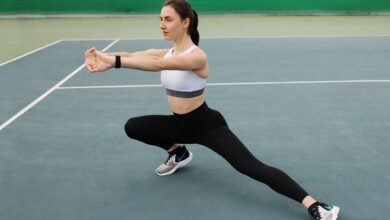
Yoga for Back Pain: 12 Safe Poses, a 10-Minute Routine and When to Avoid Them


Yoga for back pain is one of the most studied movement options for a problem that affects millions of people at some point in life. Used gently and sensibly, it can help you move more easily, build the strength that supports your spine, and calm the tension that often makes pain feel worse. Used carelessly, with deep backbends, long holds or pushing through sharp pain, it can aggravate things.
This guide is built to keep you on the safe side. You will find what the research actually says, who should check with a professional first, the warning signs that mean stop, 12 poses with exact steps, hold times, modifications and cautions, a 10-minute routine, a 4-week beginner plan, and advice for sciatica, disc problems, stenosis, pregnancy, older adults and desk workers.
For most people with ongoing (chronic) non-specific low back pain, gentle yoga practised 2 to 4 times a week is a reasonable, yoga for back pain low-risk option. Start with 10 minutes, hold each pose 20 to 40 seconds, move slowly, and stop if pain becomes sharp, shooting or spreads down a leg. If you have red flags (see below), see a doctor first.
Does Yoga for Back Pain Work?
The honest answer is: it often helps, the effect is modest, and it is not magic.
- Cochrane review (2017): A review of 12 randomised trials of yoga for chronic non-specific low back pain found low-to-moderate certainty evidence that yoga improves back-related function at 3 and 6 months compared with no exercise, with smaller effects on pain. The authors noted that yoga was not clearly better than other back-focused exercise (Wieland et al., 2017).
- Yoga vs physical therapy (2017): In a trial of 320 adults with chronic low back pain, a 12-week yoga programme performed about as well as physical therapy for function and pain, and both did better than a self-care book (Saper et al., 2017).
- Earlier trial (2011): Adults with chronic low back pain who took weekly yoga classes improved on function more than those given a self-care book, with results similar to a stretching class (Sherman et al., 2011).
- Systematic review of chronic low back pain (2016): Most studies and recent trials suggested yoga can reduce pain and disability and is generally well tolerated and liked by participants (Chang et al., 2016).
- Guidelines: The American College of Physicians lists yoga among the non-drug options to try first for chronic low back pain, alongside exercise, tai chi, yoga for back pain mindfulness-based stress reduction and others. For acute (new) pain, it suggests heat, massage, acupuncture or spinal manipulation instead (Qaseem et al., 2017).
What this means for you: Studies mostly involve supervised, beginner-friendly yoga over 8 to 12 weeks, not advanced or aggressive practice. Benefits vary between people. Yoga may help, it does not cure back pain, and it works best when you are consistent.
Is Yoga for Back Pain Safe? Who Should Check With a Doctor First

For most people, gentle yoga has a low risk of serious harm. yoga for back pain Mild muscle soreness is common. Still, speak to a doctor or physical therapist before starting if you:
- have pain after a fall, car accident or sports injury
- have been diagnosed with a herniated disc, spinal stenosis, spondylolisthesis, a spinal fracture or osteoporosis
- are pregnant or recently gave birth
- have had spine surgery
- have pain that is getting worse, wakes you at night, or has lasted for weeks without improvement
- have a history of cancer, or unexplained weight loss
Tell any yoga teacher about your back before class begins. Good teachers will offer changes, and you can always skip a pose.
Red Flags: When to Stop and Get Medical Help

Stop practising and seek urgent medical care if back pain comes with any of these:
- New trouble controlling your bladder or bowels, or difficulty passing urine
- Numbness in the groin, genitals or inner thighs (“saddle” area)
- Weakness in a leg or foot that is new or getting worse, such as foot drop
- Fever, chills or feeling generally unwell with back pain
- Severe pain after trauma, or pain that is constant and not eased by any position
- Unexplained weight loss along with back pain
These can signal conditions such as cauda equina syndrome, yoga for back pain infection or fracture, which need prompt assessment. Do not wait for a yoga session to “fix” them.
Stop the pose, not just the session, if you feel: sharp or stabbing pain, pain that shoots down a leg, tingling that gets worse, or dizziness.
Acute vs Chronic Back Pain: Does It Change What You Should Do?
Yes, and most articles skip this.
Acute pain (new, under about 6 weeks): Most acute low back pain improves on its own. Gentle walking and easy movement usually help more than bed rest. During the first few days, yoga for back pain keep yoga very light: breathing, knee-to-chest, and gentle Cat-Cow in a small range. Skip twists and backbends until pain eases, and see a clinician if it is severe or not improving.
Chronic pain (over about 12 weeks): This is where most of the research on yoga sits. A steady, graded routine of 2 to 4 sessions a week is reasonable, with poses chosen to suit your symptoms.
Flare-ups: Reduce your range and hold time by half, or go back to the first 3 poses in the routine below for a few days.
Before You Start: Props, Setup and Breathing
You do not need special equipment, but a few props make yoga for back pain far kinder to your spine.
- Mat or carpeted floor: Non-slip, with some cushioning.
- Two yoga blocks or thick books: To bring the floor closer.
- Strap, belt or towel: For hamstring and hip stretches when you cannot reach your foot.
- Folded blanket or pillow: Under knees, hips or head for comfort.
- Sturdy chair and a wall: For supported versions of poses.
Breathing: Breathe in and out through your nose at a slow, yoga for back pain easy pace. If you cannot breathe smoothly, you are pushing too far. Slow breathing also helps relax muscles that tighten around a sore back.
Pain rule: Aim for a mild stretch or gentle effort, around 3 out of 10 on a pain scale. Never push past 5 out of 10, and never into sharp pain.
Warm up first: A 3-minute walk or a few slow shoulder and hip circles is enough. Avoid practising right after a large meal.
12 Best Yoga Poses for Back Pain
Perform the poses in the order shown for a safe flow from gentle to slightly more active. Hold times are conservative on purpose.
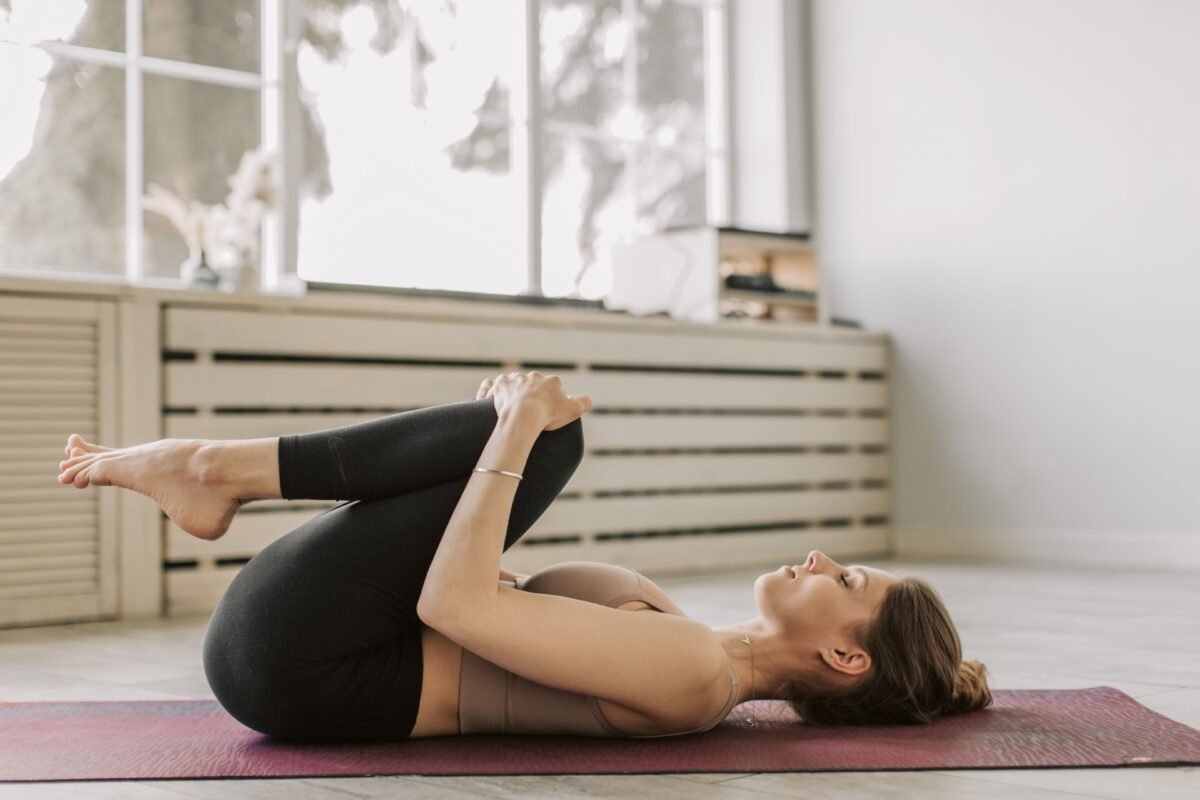
1. Knee-to-Chest Pose (Apanasana): Eases the Lower Back
Good for: Gentle release of the lower back and hips. Hold: 20 to 40 seconds per side, or both knees together.
- Lie on your back with knees bent and feet flat on the floor.
- Exhale and draw one knee toward your chest, holding behind the thigh (not on the knee joint).
- Keep your head and shoulders relaxed on the floor.
- Breathe slowly, then lower the foot and switch sides.
Modification: Keep the other leg bent with the foot flat. yoga for back pain If your neck strains, place a folded towel under your head. Caution: Pull the knee only as far as comfortable. If you have had a hip replacement, check with your surgeon first.
2. Cat-Cow (Marjaryasana-Bitilasana): Mobilises the Spine
Good for: Gentle spinal movement and warming up. Reps: 6 to 8 slow rounds.
- Come onto hands and knees, wrists under shoulders, knees under hips.
- Inhale and let your belly soften as your chest and tailbone lift slightly (Cow).
- Exhale and round your spine toward the ceiling, tucking the chin and tailbone (Cat).
- Move with your breath and keep the range small and smooth.
Modification: Pad your knees with a blanket. Sore wrists? Make fists or use forearms. Can’t kneel? Do it seated in a chair with hands on knees. Caution: If extending (Cow) increases pain, skip it and only do the rounded Cat movement. Backbends can bother some people with stenosis.
3. Child’s Pose (Balasana): Gentle Lengthening
Good for: Stretching the lower back, hips and thighs. Hold: 30 to 60 seconds.
- From hands and knees, spread your knees a little wider than your hips, big toes touching.
- Sit your hips back toward your heels.
- Walk your hands forward and rest your forehead on the floor or a block.
- Breathe into your back and let it widen.
Modification: Place a bolster, pillow or folded blankets under your chest and head. yoga for back pain If hips don’t reach your heels, put a rolled blanket behind your knees. Caution: Skip if you have knee pain or recent knee surgery, or if it increases back pain. Avoid holding for 5 minutes.
4. Thread the Needle: Releases the Upper and Mid Back
Good for: Gentle rotation and upper-back tension. Hold: 20 to 30 seconds per side.
- Start on hands and knees.
- Slide your right arm under your left arm, palm up, lowering your right shoulder and ear to the floor.
- Keep hips over knees and breathe.
- Press into your left hand to come out and switch sides.
Modification: Rest your head on a folded blanket or block. Caution: Move out gently if you feel pinching in the shoulder or neck.
5. Supine Spinal Twist: Soothes Tight Muscles
Good for: Easy rotation and relaxation. Hold: 20 to 40 seconds per side.
- Lie on your back with arms out to the sides in a “T”.
- Bend both knees and let them fall slowly to one side, supported by a pillow if needed.
- Keep both shoulders heavy on the floor and look straight ahead or away from your knees.
- Return to centre with an exhale and switch sides.
Modification: Keep knees high and close to your chest, with a pillow between or under them, to reduce the range. Caution: Avoid deep twists with a recent disc injury, osteoporosis or pregnancy (past the first trimester). Stop if you feel pain down a leg.
6. Reclined Figure Four: Opens Hips and Glutes
Good for: Tight hips and glutes that pull on the lower back. Hold: 30 to 45 seconds per side.
- Lie on your back with knees bent, feet flat.
- Cross your right ankle over your left thigh, just above the knee.
- Keep your right foot flexed to protect the knee.
- Hold behind your left thigh and draw it gently toward you until you feel a stretch in the right hip.
Modification: Use a strap around the thigh if you can’t reach, or keep the lower foot on the floor. Caution: Do not force the knee outward. Back off if you feel knee pain.
7. Bridge Pose (Setu Bandhasana): Strengthens Glutes and Back Support
Good for: Building the glutes and hamstrings that support your spine. Hold: 10 to 20 seconds, 5 to 8 reps.
- Lie on your back, knees bent, feet hip-width apart, heels close to your hips.
- Press through your feet and gently lift your hips until your body forms a straight line from knees to shoulders.
- Squeeze your glutes, keep your ribs soft and your neck relaxed.
- Lower slowly, one vertebra at a time.
Modification: Lift only a few inches, or place a block under your sacrum (flat lower back bone) for a supported version. Caution: Don’t over-arch the lower back. Skip if it causes pain, and avoid turning your head while in the pose.
8. Bird Dog: Builds Core Stability
Good for: Training the deep muscles that stabilise the spine. Hold: 5 to 10 seconds, 5 reps per side.
- Start on hands and knees with a neutral spine.
- Slowly extend your right leg straight behind you at hip height.
- Once steady, reach your left arm forward.
- Keep hips level, as if balancing a glass of water on your lower back. Return and switch sides.
Modification: Lift only the leg, or only the arm, at first. Caution: Don’t lift higher than your hip. A sagging or twisting back means the range is too big.
9. Sphinx Pose: A Gentle, Supported Backbend
Good for: Easing stiffness for some people with a flexion-sensitive back. Hold: 15 to 30 seconds, up to 3 reps.
- Lie on your stomach with legs hip-width apart.
- Place forearms on the floor, elbows under shoulders.
- Gently lift your chest, keeping your belly and hips on the floor.
- Lengthen the back of your neck and breathe.
Modification: Place a pillow under your hips or chest, or skip it entirely. Caution: This is a mild backbend and not right for everyone. Avoid if you have spinal stenosis, spondylolisthesis or if it increases pain. Do not hold it for several minutes.
10. Supported Low Lunge: Opens Tight Hip Flexors
Good for: Long sitting often shortens hip flexors, which can tug on the lower back. Hold: 20 to 30 seconds per side.
- Kneel with a cushion under your knees. Step your right foot forward, knee over the ankle.
- Place hands on your right thigh or on blocks.
- Tuck your tailbone slightly and shift hips forward until you feel a stretch at the front of the left hip.
- Keep your ribs stacked over hips and breathe.
Modification: Hold a chair or wall for balance. Caution: Don’t let the lower back arch. Skip if you have knee pain.
11. Supine Hamstring Stretch With Strap: Relieves Pull on the Pelvis
Good for: Tight hamstrings that can limit pelvic movement. Hold: 30 to 45 seconds per side.
- Lie on your back with a strap around your right foot.
- Straighten the right leg toward the ceiling, keeping the left knee bent or leg flat.
- Keep your tailbone on the floor and your shoulders relaxed.
- Hold gently, then switch sides.
Modification: Bend the raised knee slightly if the back of the leg feels pulled sharply. Caution: Stop if you feel tingling or pain moving down the leg, especially if you have sciatica.
12. Legs Up the Wall (Viparita Karani): Restores and Relaxes
Good for: Calming the nervous system and ending a session. Hold: 1 to 3 minutes.
- Sit sideways next to a wall, then swing your legs up as you lie back.
- Let your hips rest near the wall (a few inches away is fine).
- Rest your arms by your sides and breathe slowly.
- To come out, bend your knees, roll to one side and rest before sitting.
Modification: Place a folded blanket under your hips, or rest calves on a chair seat instead. Caution: Not suited for people with glaucoma, serious heart problems or severe reflux unless a doctor agrees.
A 10-Minute Yoga for Back Pain Routine
Short, regular sessions are often easier to keep up than long ones. Try this sequence once a day or on most days.
| Step | Pose | Time | Notes |
|---|---|---|---|
| 1 | Slow breathing on your back, knees bent | 1 min | Hands on belly, breathe slowly |
| 2 | Knee-to-Chest | 1 min | 30 seconds per side |
| 3 | Cat-Cow | 1.5 min | Small, smooth movements |
| 4 | Child’s Pose | 1 min | Use a bolster if needed |
| 5 | Thread the Needle | 1.5 min | 45 seconds per side |
| 6 | Reclined Figure Four | 1.5 min | 45 seconds per side |
| 7 | Supine Spinal Twist | 1.5 min | 45 seconds per side |
| 8 | Legs Up the Wall | 1 min | Finish with slow breathing |
4-Week Beginner Plan
This plan builds up slowly. Rest days matter, and gentle walking on those days is fine.
| Week | Sessions | Focus | What to do |
|---|---|---|---|
| 1 | 3 per week | Mobility and calm | 10-minute routine above, holds of 20 to 30 seconds |
| 2 | 3 to 4 per week | Add hip opening | Routine plus Supported Low Lunge and Supine Hamstring Stretch |
| 3 | 4 per week | Add strength | Add Bridge (5 reps) and Bird Dog (4 reps per side) |
| 4 | 4 per week | Build confidence | Choose 8 to 10 poses you tolerate best, 15 to 20 minutes, holds up to 40 seconds |
How to know it is working: Look for easier morning movement, fewer stiff days and better tolerance for sitting. Keep a simple note of pain (0 to 10) before and after each session. If pain is trending up over 2 weeks, ease off and speak to a clinician.
Yoga for Back Pain by Condition
Back pain is not all the same. Use this table as a starting point, and always follow your own clinician’s advice if you have a diagnosis.
| Situation | Poses that often feel better | Poses to avoid or modify | Key advice |
|---|---|---|---|
| Sciatica (leg pain from irritated nerve) | Knee-to-Chest, Reclined Figure Four, Legs Up the Wall | Deep forward folds, aggressive hamstring stretches, deep twists | Stop if leg symptoms spread further down the leg. See a doctor for numbness or weakness. |
| Herniated or bulging disc | Cat-Cow (small range), Bird Dog, Bridge (low) | Deep forward folds, deep twists, loaded flexion | Responses vary: some feel better with backbends, others with flexion. Let symptoms guide you and check with a professional. |
| Spinal stenosis | Knee-to-Chest, Child’s Pose, supported forward bends | Sphinx and other backbends, deep extension | Many people feel better when the spine is slightly flexed. Avoid prolonged extension. |
| Sacroiliac (SI) joint pain | Bridge (low), Bird Dog, gentle Knee-to-Chest | Wide-legged stretches, deep Figure Four, asymmetrical twists | Keep movements symmetrical and small. |
| Pregnancy | Cat-Cow, Supported Child’s Pose (knees wide), side-lying poses | Lying flat on the back after the first trimester, deep twists, belly-down poses | Ask your midwife or doctor first. Choose a prenatal class when possible. |
| Older adults / osteoporosis | Chair-based Cat-Cow, Bridge (low), Bird Dog (arm or leg only) | Deep forward folds, deep twists, heavy flexion | Weak bones are more vulnerable. Avoid rounding forward under load. Seek guidance first. |
| Desk workers with stiff hips and tight upper back | Low Lunge, Thread the Needle, Cat-Cow, Hamstring Stretch | Long, static holds without breaks | Add 1-minute movement breaks each hour and a short evening routine. |
Yoga for Back Pain at Home
You can practise safely at home with a mat, a pillow and a wall. Choose a quiet space, wear comfortable clothing and keep your phone away. Follow the 10-minute routine, stay within your pain rule (3 out of 10), and stop if anything feels sharp. A video can be helpful, but choose a beginner or gentle class led by a qualified teacher, and pause or skip anything that doesn’t suit you.
Yoga for Back Pain From Sitting
Hours of sitting can leave hips tight and your back stiff. Pair the routine with simple habits: stand or walk for a minute every 30 to 45 minutes, keep your feet supported, adjust your chair height so hips are slightly above knees, and do 3 poses from the routine (Cat-Cow in the chair, Low Lunge, Thread the Needle) after work.
Poses to Avoid or Modify With Back Pain
Some common yoga poses place heavy load on a sensitive spine. Modify them, or skip them, until you have guidance.
- Deep standing or seated forward folds with straight legs: Bend the knees, hinge from the hips and keep the back long, or use a chair.
- Full wheel, camel and deep backbends: Skip these if you have stenosis, spondylolisthesis or a recent flare-up.
- Deep or forceful twists: Keep them small, especially with disc problems or osteoporosis.
- Plank and Upward-Facing Dog held for long periods: Build strength first with Bird Dog and Bridge, or practise Plank on knees.
- Boat pose, full-range sit-ups and double leg lifts: Choose gentler core work such as Bird Dog.
- Pigeon pose: Replace with Reclined Figure Four.
- Very long holds: Holding a pose for several minutes isn’t needed. Keep to 20 to 60 seconds.
Yoga vs Physical Therapy vs Walking: How Do They Compare?
| Option | How it may help | Things to consider |
|---|---|---|
| Yoga | Combines stretching, strength, breathing and relaxation. Trials suggest benefits similar to PT for chronic low back pain. | Quality of teaching matters. Not a substitute for diagnosis. |
| Physical therapy | Personalised assessment, targeted exercises, hands-on guidance. | Costs more and requires appointments. Best for complex or persistent pain. |
| Walking | Easy to start, builds endurance, helps keep the back moving. | Less targeted work on flexibility and core control. |
These options work well together. Many people do best with a mix: walking most days, yoga a few times a week and physical therapy when they need a tailored plan.
Common Mistakes to Avoid
- Pushing into pain. A stretch should feel mild. Sharp or shooting pain is a signal to stop.
- Holding too long. Long holds can irritate sensitive tissues. Stay with 20 to 60 seconds.
- Going straight to advanced poses. Strength and control come first.
- Rounding or collapsing in forward folds. Bend the knees and keep the spine long.
- Skipping props. Props are tools, not a sign of weakness.
- Holding your breath. Smooth breathing keeps muscles relaxed.
- Doing it only when pain is bad. Regular, short sessions work better than occasional long ones.
- Ignoring red flags. See a doctor for bladder or bowel changes, saddle numbness, new weakness, fever or pain after injury.
- Following a pose from a picture alone. Read the steps, and use a mirror or a qualified teacher if you are unsure.
FAQs About Yoga for Back Pain
Is yoga good for back pain?
For many people with chronic low back pain, yes. Trials and reviews suggest yoga can improve function and reduce pain modestly, with an effect similar to other back-focused exercise. It is not guaranteed to work for everyone, and it does not replace medical care for serious causes of pain.
What is the best yoga for back pain relief for beginners?
Start with gentle poses such as Knee-to-Chest, Cat-Cow, Child’s Pose and Reclined Figure Four. Learn them well before adding Bridge and Bird Dog. A beginner or gentle class with a qualified teacher is a good starting place.
How often should I do yoga for back pain?
Two to four short sessions a week is a sensible start, building up from 10 minutes. Daily gentle practice is fine for many people if it feels good. Rest or reduce the load if pain rises.
Can yoga make back pain worse?
It can if you push too far, hold too long, or choose poses that don’t suit your condition. Keep to the 3 out of 10 effort rule, modify, and stop if pain is sharp, spreading or accompanied by red flag symptoms.
Is yoga good for sciatica?
Some gentle poses, such as Reclined Figure Four and Legs Up the Wall, help some people. Others find stretching the hamstrings or deep folds makes leg symptoms worse. If you have numbness, weakness or pain that is spreading, see a doctor.
Should I do yoga when my back hurts right now?
With a new, mild flare-up, easy breathing, Knee-to-Chest and a small Cat-Cow can be okay. Avoid twists and backbends until it settles. For severe pain, pain after injury, or any red flag, get medical advice instead.
Final Thoughts
Yoga for back pain can be a safe, low-cost way to build strength, flexibility and calm, provided you respect your body’s limits. Start with the 10-minute routine, follow the 4-week plan, use props and modifications, and keep holds short and gentle. Watch for red flags, and don’t hesitate to ask a doctor or physical therapist for personal advice, especially if you have a diagnosed spine condition.
Progress is usually gradual. A few weeks of steady, mindful practice often tells you far more than any single session.