How Much Protein in an Egg? The Complete Breakdown (Egg, White, Yolk, Calories and More)


If you have ever wondered how much protein in an egg you actually get, the short answer is simple: one large egg contains about 6.3 grams of protein. That number changes with egg size, with whether you eat the whole egg or only the white, and with how you cook it. Eggs are cheap, easy to find, quick to cook and packed with nutrients, which is why they remain one of the most popular protein foods in the world.
People search for this topic in many different ways. Some ask how much protein does an egg have, others type how many grams of protein in one egg, and many want to know about egg white protein, calories, carbs and cholesterol all at once. This guide answers all of those questions in one place. You will find protein numbers for small, medium, large, extra-large and jumbo eggs, how much protein in an egg a clear comparison of egg white and yolk, calories in one egg, protein in 2, 3, 4 and 5 eggs, and practical advice on how to fit eggs into your daily diet.
All values below are approximate and based on standard USDA food composition data for a typical egg. Real eggs vary a little, so treat the numbers as reliable estimates rather than laboratory measurements.
how much protein in an egg

Here is the fast version for readers in a hurry:
- 1 large egg: about 6.3 g protein and about 72 calories
- 1 large egg white: about 3.6 g protein and about 17 calories
- 1 large egg yolk: about 2.7 g protein and about 55 calories
- 2 large eggs: about 12.6 g protein
- 3 large eggs: about 18.9 g protein
- 4 large eggs: about 25.2 g protein
- 5 large eggs: about 31.5 g protein
If you only remember one number, remember this: an egg has about 6 grams of protein, and a little more than half of it sits in the white.
How Much Protein Is in One Egg?
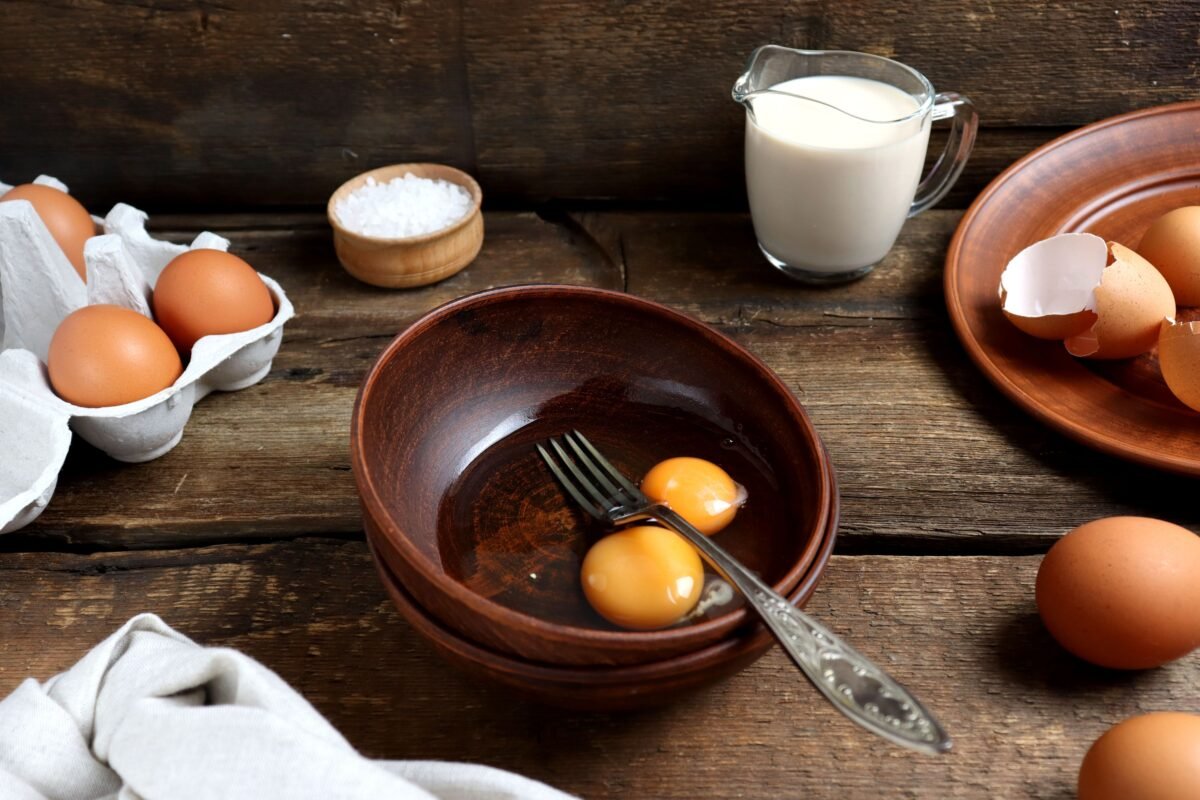
The amount of protein in one egg depends mostly on its size. A bigger egg has more edible content, so it has more protein. how much protein in an egg When people ask how many grams of protein are in an egg without naming a size, nutrition labels and databases almost always refer to a large egg, which weighs about 50 grams without the shell.
So when you read that 1 egg has how much protein and the answer is 6.3 grams, that figure belongs to a large egg. Here is how the other sizes compare.
| Egg size | Edible weight (approx.) | Protein | Calories |
|---|---|---|---|
| Small | 38 g | 4.8 g | 54 |
| Medium | 44 g | 5.5 g | 63 |
| Large | 50 g | 6.3 g | 72 |
| Extra-large | 56 g | 7.1 g | 80 |
| Jumbo | 63 g | 7.9 g | 90 |
These numbers answer many of the most common questions at once. how much protein in an egg An egg contains about 5 to 8 grams of protein depending on size, and the egg you buy in most stores is a large or medium egg. If you are tracking your protein closely, check the carton, because the size is printed on it.
How Many Grams Is One Egg?
A common related question is how many grams in one egg. A large egg weighs roughly 50 grams once the shell is removed, and about 57 grams with the shell on. Of that edible weight, how much protein in an egg around 33 grams is egg white and around 17 grams is yolk. Knowing this makes it easy to convert between whole eggs and measured portions, which becomes useful when a recipe or meal plan lists egg quantities in grams.
How Much Protein in a Large Egg?
A large egg gives about 6.3 grams of protein. People who ask how many grams of protein does a large egg have or how many grams of protein are in a large egg will find that this is the standard reference value used in food labels and diet apps. how much protein in an egg Because it is the most common size, you can use 6.3 grams as a dependable everyday estimate.
Protein in a Small, Medium, Extra-Large and Jumbo Egg

A small egg has about 4.8 grams of protein, a medium egg about 5.5 grams, an extra-large egg about 7.1 grams and a jumbo egg about 7.9 grams. The difference between a small and a jumbo egg is more than 3 grams, how much protein in an egg which can add up if you eat several eggs a day. If you want to know how many calories in a jumbo egg, the answer is about 90 calories, compared with about 72 calories in a large egg.
How Much Protein Is in 2, 3, 4 and 5 Eggs?
Most people do not eat just one egg. A typical breakfast has two or three, and some meal plans use four or five. Using large eggs at 6.3 grams each, the totals are easy to calculate.
| Number of large eggs | Protein | Approx. calories |
|---|---|---|
| 1 egg | 6.3 g | 72 |
| 2 eggs | 12.6 g | 144 |
| 3 eggs | 18.9 g | 216 |
| 4 eggs | 25.2 g | 288 |
| 5 eggs | 31.5 g | 360 |
How Much Protein in 2 Eggs?
Two eggs contain about 12.6 grams of protein. If you are asking how many grams of protein are in 2 eggs or how many grams of protein are in two eggs, that is your answer for large eggs. how much protein in an egg Two medium eggs would give about 11 grams, and two jumbo eggs would give about 15.8 grams. Two eggs make a light breakfast or a solid snack, and adding whole-grain toast, vegetables or Greek yogurt turns them into a more complete meal.
How Much Protein in 3 Eggs?
Three eggs provide about 18.9 grams of protein, so 3 eggs how much protein is easy to remember: just under 19 grams. Three eggs are close to the 20-gram mark that many people use as a target for one meal. A three-egg vegetable omelette is a popular choice for exactly this reason. If you are curious about how many grams of protein are in 3 eggs for a jumbo size, the total rises to about 23.7 grams.
How Much Protein in 4 Eggs?
For people who ask 4 egg how much protein, four large eggs give about 25.2 grams. If you want to know how many grams of protein in 4 eggs in terms of calories as well, how much protein in an eggexpect roughly 288 calories before any oil, butter or cheese. This is a large amount of protein from one food, so balance the meal with vegetables, fruit or whole grains.
How Much Protein in 5 Eggs?
People who wonder 5 eggs how much protein will be glad to hear that five large eggs supply about 31.5 grams. That is a high amount for a single meal, and it is not necessary for everyone. Your ideal portion depends on your body weight, activity level and the rest of your diet.
How Much Protein Is in a Boiled Egg?
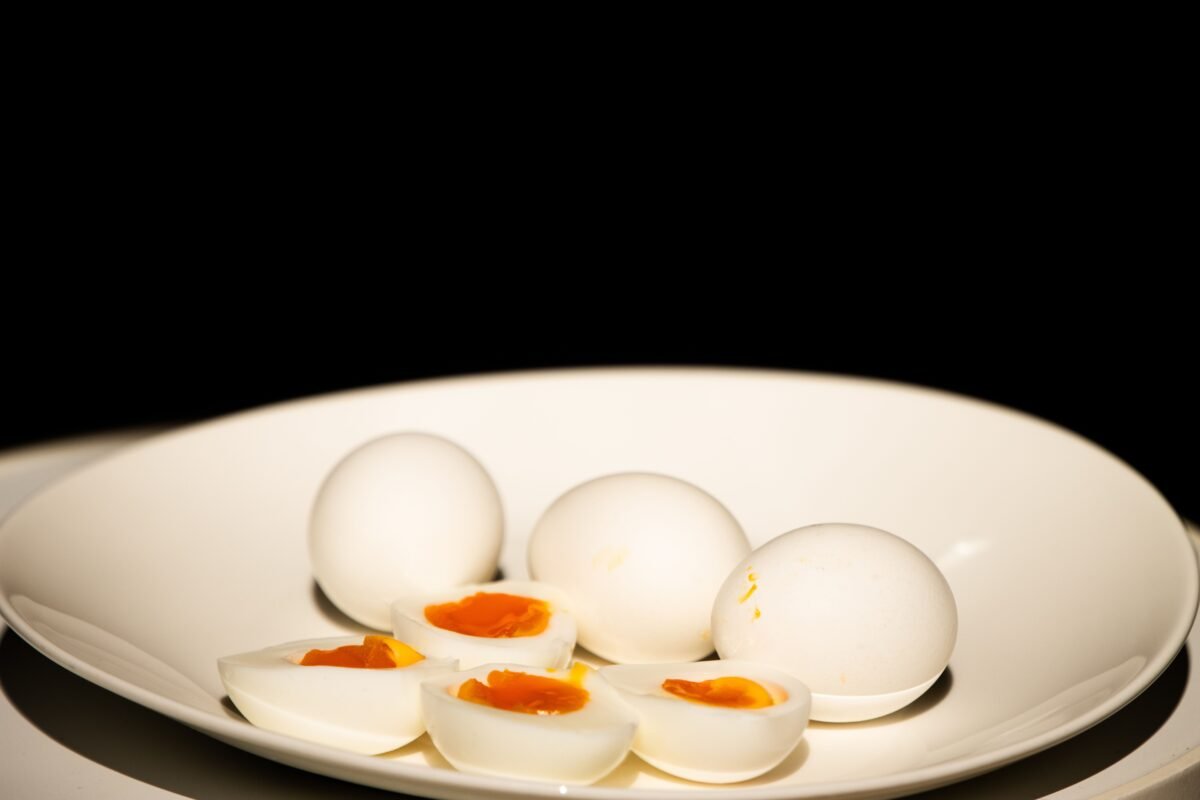
Boiled eggs are the easiest eggs to track. Searches such as boiled egg how much protein, 1 boiled egg how much protein and how many grams of protein in a boiled egg all lead to the same figure: how much protein in an egg a large boiled egg has about 6.3 grams of protein. In fact, how many grams of protein in 1 hard boiled egg is the same number, because boiling does not add or remove protein in any meaningful way. A hard-boiled egg also has about 78 calories and roughly 5.3 grams of fat.
Boiling needs no oil or butter, which is why it is such a clean way to measure what an egg really contains. Two large hard-boiled eggs give about 12.6 grams of protein and about 155 calories. Anyone asking how many calories is 2 hard boiled eggs can use that figure as a good estimate.
Boiled eggs also keep well. You can cook a batch at the start of the week and add them to salads, sandwiches, rice bowls or lunch boxes. Many people peel two or three eggs for a quick snack after exercise.
How Much Protein Is in an Egg White?
The egg white, also called albumen, is the clear part of the egg. It is famous among fitness fans because it gives a good amount of protein with almost no fat. how much protein in an egg If you have searched how much protein in egg whites, egg white protein how much or 1 egg white how much protein, here is the answer: one large egg white contains about 3.6 grams of protein.
That means how many grams of protein are in an egg white is about 3.6 grams for a large egg. A medium egg white has a little less, around 3.2 grams. Many people also ask how many grams in an egg white. A large egg white weighs about 33 grams, and the same number answers how many grams is 1 egg white and how many grams of egg white in one egg. The white makes up roughly two thirds of the edible weight of the egg.
Protein in Multiple Egg Whites
Egg whites are often eaten in larger numbers, so it helps to know the totals.
| Number of large egg whites | Protein | Approx. calories |
|---|---|---|
| 1 egg white | 3.6 g | 17 |
| 2 egg whites | 7.2 g | 34 |
| 3 egg whites | 10.8 g | 51 |
| 6 egg whites | 21.6 g | 102 |
| 10 egg whites | 36 g | 170 |
So if you are asking 10 egg white how much protein, the answer is about 36 grams. This is a high-protein, low-fat option, and it shows why egg whites are popular in diet plans.
How Many Eggs Is 100 Grams of Egg White?
Recipes and diet plans sometimes list egg whites in grams. If you wonder 100g egg white how many eggs or how many eggs is 100 grams of egg white, how much protein in an egg the answer is about 3 large egg whites, since each weighs roughly 33 grams. Likewise, if you are asking how many eggs for 100g egg white, you need about 3 large eggs and just the whites. In protein terms, 100 grams of egg white gives roughly 10.9 grams of protein. That also answers how many grams of protein in 100g of egg white.
Egg White Cartons: How Many Eggs Are Inside?
Liquid egg whites are sold in cartons, and people often ask how many eggs in egg white carton. The answer depends on the carton size and brand. A common carton can be equal to roughly a dozen or a little more egg whites, how much protein in an egg but you should always read the label. The label usually tells you the serving size, the protein per serving and the number of servings, which is the most accurate way to plan your meals.
How Many Calories Are in an Egg White?
Egg whites are very low in calories. If you have asked how many calories in one egg white, egg white how many calories or how many calories does one egg white have, the answer is about 17 calories for one large egg white. how much protein in an egg That is why 1 egg white contains how much calories is a popular search among people watching their calorie intake.
A few more common questions:
- How many calories are in boiled egg white? About 17 calories per large boiled white, the same as raw. Searches like how many calories in 1 egg white boiled have the same answer.
- How many calories in a medium egg white? About 15 calories.
- How many calories in 3 egg white? About 51 calories.
- How many calories in 6 egg white? About 102 calories.
- How many calories are there in one egg white if cooked with oil? The white itself stays at about 17 calories, but any oil or butter adds more.
Because egg whites are so light, you can eat several and still keep a meal under 200 calories, as long as you do not add much oil or cheese.
How Many Carbs Are in Egg Whites?
People on low-carb or keto diets often ask how many carbs are in egg whites. The answer is very little. One large egg white has about 0.2 grams of carbohydrate, and 100 grams of egg white has about 0.7 grams. If you have wondered 1 egg has how many carbs, how much protein in an egg a whole large egg has about 0.4 grams. Those who search how many carbs and protein in an egg can remember this simple summary: roughly 0.4 grams of carbs and 6.3 grams of protein in a large whole egg.
This makes eggs one of the easiest foods to fit into a low-carb eating plan.
How Much Cholesterol Is in Egg White?
A very common question is how much cholesterol in egg white, sometimes written as how many cholesterol in egg white. The answer is zero. Egg white contains no cholesterol. All of the cholesterol in an egg is found in the yolk, and a large egg yolk contains roughly 185 milligrams.
This is one reason people who want to limit dietary cholesterol choose egg whites. At the same time, current nutrition research has shown that for most healthy people, dietary cholesterol has a smaller effect on blood cholesterol than saturated fat and overall diet quality. how much protein in an egg If you have high cholesterol, diabetes, heart disease or another medical condition, speak with your doctor or a registered dietitian about how many yolks are suitable for you.
How Many Egg Whites Can You Eat Per Day?
If you are asking how many egg white per day is reasonable, there is no single rule that applies to everyone. For a healthy adult, how much protein in an egg three to six egg whites a day can fit into a balanced diet for many people, but your own limit depends on your health, your total protein intake and the other foods you eat.
A few practical points:
- Always cook egg whites. Raw egg whites contain a protein called avidin that can reduce biotin absorption, and raw eggs also carry a food-safety risk.
- Do not rely on egg whites alone. The yolk contains vitamins and minerals you will miss if you remove it every time.
- Variety matters. Combine egg whites with vegetables, whole grains, legumes and other protein foods.
How Much Protein Is in an Egg Yolk?
The yolk is the yellow center of the egg. A large yolk has about 2.7 grams of protein and about 55 calories. It holds most of the egg’s fat, which is around 4.5 grams, and most of its vitamins and minerals.
People who ask how many calories in an egg yolk can use the figure of about 55 calories for a large yolk. In return for those calories, how much protein in an egg the yolk offers vitamin B12, vitamin A, vitamin D, choline, selenium and iron.
Egg White vs. Egg Yolk Protein
Which has more protein? The white has more.
| Part of a large egg | Protein | Calories | Fat | Cholesterol |
|---|---|---|---|---|
| Whole egg | 6.3 g | 72 | 4.8 g | about 185 mg |
| Egg white | 3.6 g | 17 | 0 g | 0 mg |
| Egg yolk | 2.7 g | 55 | 4.5 g | about 185 mg |
The white provides about 57 percent of the protein, while the yolk provides about 43 percent. However, the yolk is much more nutrient-dense. Choosing only whites lowers calories and fat, how much protein in an egg but you also lose important nutrients. For many people, the best approach is to eat whole eggs most of the time and add extra egg whites when they want more protein without many extra calories.
How Many Calories Are in an Egg?
Protein is only part of the story, so let us look at calories. People often type egg contains how many calories, how many calories does eggs have, how many calories does one egg has, how many calories in a single egg or how many calories is in one large egg. The answer for a large egg is about 72 calories.
That is the same as egg has how much calories and how many calories has 1 egg. For different sizes, a small egg has about 54 calories, a medium egg about 63, an extra-large egg about 80 and a jumbo egg about 90. This also answers how many calories in a jumbo egg.
Calories and Protein in an Egg Together
Many readers want both numbers in one place. how much protein in an egg If you have searched how many calories and protein in an egg, how many calories and protein are in an egg, how many calories and grams of protein in an egg or how many calories and protein in 1 egg, here is the combined answer for a large egg:
- Calories: about 72
- Protein: about 6.3 grams
- Fat: about 4.8 grams
- Carbohydrates: about 0.4 grams
That is a strong protein return for a small number of calories. About 35 percent of the calories in a whole egg come from protein, and the rest come mostly from fat.
How Many Calories in a Fried Egg?
People also ask how many calories has a fried egg. A large fried egg has about 90 calories, how much protein in an egg but the exact figure depends on the oil or butter used. The protein stays at about 6.3 grams, while the extra calories come from cooking fat. If you fry two eggs in a tablespoon of oil, you will add more than 100 calories on top of the eggs themselves.
How Much Protein Is in Eggs Based on Cooking Method?
Cooking does not remove the protein from eggs. Whether you boil, poach, fry or scramble, a large egg still provides about 6 grams of protein.
| Cooking method | Protein per large egg | What changes |
|---|---|---|
| Boiled | 6.3 g | Almost nothing, no added fat |
| Poached | 6.3 g | Almost nothing, no added fat |
| Fried | about 6.3 g | Oil or butter adds calories |
| Scrambled | about 6 g | Milk, butter or cheese change the total |
What does change is how well your body can digest the protein. Heat makes egg protein easier to digest, so a cooked egg is actually used more efficiently than a raw one. The process is called protein denaturation. The proteins unfold and set, which is why the egg turns firm, but they are not destroyed.
So the answer to does a boiled egg have more protein than a raw egg is no. how much protein in an egg The protein amount is essentially the same. The bigger difference comes from the ingredients you add, such as oil, butter, cheese or milk.
Is Egg Protein a Complete Protein?
Yes. Egg protein is a complete protein, which means it contains all nine essential amino acids that your body cannot make on its own. These are histidine, isoleucine, leucine, lysine, methionine, phenylalanine, threonine, tryptophan and valine.
Egg protein is also well digested and efficiently used by the body, which is why scientists often use it as a reference when comparing the quality of other proteins. Your body uses amino acids to repair tissues, build enzymes and support muscle maintenance. If you exercise regularly, how much protein in an egg eggs can be a helpful part of your recovery meals. Muscle growth still depends on resistance training, enough total calories, enough sleep and a balanced diet, so eggs help but are not magic on their own.
How Many Eggs Do You Need for Enough Protein?
Some readers ask how many eggs is enough protein, how many eggs is a serving of protein or how many eggs is one serving of protein. The answer depends on your goal.
In general dietary guidance, one egg counts as one serving-equivalent from the protein foods group. That does not mean one egg is all the protein you need at a meal, only that it counts as a unit when you plan your day. Here is a simple way to think about it:
- For a light meal or snack: 1 to 2 eggs, about 6 to 13 grams of protein.
- For a standard breakfast: 2 to 3 eggs, about 13 to 19 grams of protein.
- For a bigger, high-protein meal: 3 to 4 eggs, about 19 to 25 grams of protein, ideally with other foods.
A commonly used reference for healthy adults is about 0.8 grams of protein per kilogram of body weight per day. For a 70 kg adult, that is about 56 grams. Active people, older adults, pregnant women and people recovering from illness may need more. A doctor or registered dietitian can help you find a safe target.
Other Nutrients in Eggs
Eggs offer much more than protein. A whole egg provides:
- Choline: one large egg has about 147 mg, which supports brain function, nerves and cell structure.
- Vitamin B12: helps nerve function and the formation of red blood cells.
- Vitamin A: supports vision and the immune system.
- Vitamin D: helps the body absorb calcium.
- Riboflavin: helps convert food into energy.
- Selenium: supports thyroid function and protects cells.
- Iron: helps carry oxygen in the blood.
Most of these nutrients are in the yolk, which is why egg-white-only eating plans can miss out. Whole eggs give you a wider range of nutrition in just 72 calories.
How Do Eggs Compare With Other Protein Foods?
Eggs are a great source of protein, but they are not the only one. This table compares common foods per 100 grams.
| Food (100 g) | Approx. protein |
|---|---|
| Chicken breast, cooked | 31 g |
| Whole egg, hard-boiled | 12.6 g |
| Egg white, raw or cooked | about 10.9 g |
| Plain nonfat Greek yogurt | 10 g |
| Lentils, boiled | 9 g |
| Black beans, boiled | 8.9 g |
| Whole milk | 3.2 g |
Chicken breast has more protein by weight, but eggs are quicker to cook, cheaper in many places and rich in choline and vitamin B12. how much protein in an egg Greek yogurt and eggs make a great pair at breakfast. Lentils and beans offer protein plus fibre, so they are excellent partners for eggs in a wrap or bowl.
Easy Ways to Eat More Protein With Eggs
Here are simple ideas that use eggs without making meals boring:
- Boiled eggs with whole-grain toast: two eggs, toast and sliced vegetables give protein, carbs and fibre.
- Vegetable omelette: use tomato, spinach, onion and peppers. Add one or two extra egg whites for more protein with few extra calories.
- Scrambled eggs with milk: a splash of milk makes them soft. Cook them in a non-stick pan with only a little oil.
- Eggs with Greek yogurt: pair boiled eggs with plain Greek yogurt and fruit for protein from two sources.
- Egg and bean wrap: scrambled eggs, cooked beans and vegetables in a whole-grain wrap make a filling lunch.
- Egg white scramble: cook 4 egg whites with mushrooms and herbs for about 14 grams of protein and fewer than 70 calories.
Mixing eggs with chicken, cottage cheese, lentils or beans can raise the protein in a meal while adding fibre and other nutrients.
Frequently Asked Questions About Protein in Eggs
1. How much protein is in one large egg?
A large egg contains about 6.3 grams of protein: roughly 3.6 grams in the white and 2.7 grams in the yolk.
2. How many grams of protein are in an egg white?
A large egg white has about 3.6 grams of protein and only about 17 calories
3. Is most of the protein in the egg white?
Yes, the white holds slightly more of the protein, about 57 percent, but the yolk still contributes 2.7 grams plus most of the vitamins and minerals.
4. How much protein is in 2 eggs?
Two large eggs provide about 12.6 grams of protein and about 144 to 156 calories, depending on cooking.
5. How many eggs give 20 grams of protein?
Three large eggs give about 18.9 grams, which is close to 20 grams. Four large eggs give about 25.2 grams.
6. Are brown eggs higher in protein than white eggs?
No. Shell color depends on the breed of the hen. Eggs of the same size have very similar nutrition.
Final Thoughts: How Much Protein Is in an Egg?
So, how much protein is in an egg? A large egg gives about 6.3 grams, a small egg about 4.8 grams and a jumbo egg about 7.9 grams. The egg white provides about 3.6 grams of protein with very few calories, no cholesterol and almost no carbs, while the yolk adds 2.7 grams of protein along with choline, vitamin B12 and other nutrients. Two eggs give about 12.6 grams, three give about 18.9 grams, four give about 25.2 grams, and five give about 31.5 grams.
Cooking does not change the protein amount in a meaningful way, but added oil, butter, cheese and milk change the calories and fat. Eggs are a complete protein, easy to prepare and easy to combine with vegetables, grains, yogurt, lentils and beans.
Use the numbers in this guide to plan your meals, choose the egg size and number that suit your goals, and remember that a varied diet works better than relying on a single food. If you have a health condition or special nutrition needs, talk to a qualified healthcare professional or registered dietitian before making big changes.
Want to make smarter food choices and increase your daily protein intake? Explore more nutrition guides to discover simple ways to include protein-rich foods in your everyday meals.