Best Multivitamin for Women in 2026: 7 Picks, Checked Against the Label


The best multivitamin for women is the one that fills the gaps in your diet, at doses that are safe for your age, and that has been tested by an independent lab. A formula that is perfect for a 28-year-old with heavy periods can be a poor fit for a 58-year-old after menopause. This guide covers seven options, shows the real numbers from each label, and tells you who should skip multivitamins altogether.
How we researched this guide: We did not run hands-on tests, and we will not pretend otherwise. Every pick is based on its published supplement facts, best multivitamin for women third-party certifications, price per serving, and independent clinical and public-health sources (NIH, CDC, Office on Women’s Health). Formulas change often, so always confirm the numbers on the bottle in your hands.
Quick Answer: The Best Multivitamin for Women at a Glance
- Best overall (value and coverage): Nature Made Multi for Her. USP verified, one tablet a day, 18 mg iron, roughly 25 cents a serving.
- Best vegan: Ritual Essential for Women 18+. Omega-3 DHA from algae, vitamin D3, folate and B12, but only a few nutrients in total.
- Best for women over 50: Thorne Women’s Multi 50+. Flexible dose, built for needs after menopause.
- Best gummy: Lemme Multi Gummies. Easy to take, 4 g of added sugar per serving.
- Best with iron in a small tablet: One A Day Women’s Petites. 18 mg iron in a smaller pill.
- Best organic, whole-food style: Garden of Life mykind Organics Women’s Once Daily. Low in iron, no magnesium.
- Best prenatal: Thorne Basic Prenatal. Iron in a gentler form plus choline.
Not sure which one is yours? Jump to How to Choose the Best Multivitamin for Women by Age and Life Stage below.
Comparison Table: Best Multivitamins for Women Side by Side
| Product | Best for | Form and daily dose | Iron | Calcium | Vitamin D | Folate | Vegan? | Independent testing | Approx. price per serving |
|---|---|---|---|---|---|---|---|---|---|
| Nature Made Multi for Her | Value, general use | Tablet, 1 | 18 mg | Moderate | Yes | High | No | USP verified | about $0.13 to $0.26 |
| Ritual Essential for Women 18+ | Vegan, gap-filling | Capsule, 2 | 8 mg | None | 50 mcg (2,000 IU) | 1,000 mcg DFE | Yes | USP verified | about $1.10 |
| Thorne Women’s Multi 50+ | Over 50 | Capsule, 3 to 6 | None | Some | 25 mcg (1,000 IU) | Yes | No | NSF Certified for Sport | about $0.93 to $1.87 |
| Lemme Multi Gummies | Gummy lovers | Gummy, 2 | Not a focus | Low | Yes | Yes | Vegetarian | Clean Label Project | about $1.33 |
| One A Day Women’s Petites | Iron, small pills | Tablet, 2 | 18 mg | 400 mg | 25 mcg (1,000 IU) | 665 mcg | No | None listed | about $0.16 |
| Garden of Life mykind Organics | Organic, whole food | Tablet, per label | 2.5 mg | None listed | 25 mcg (1,000 IU) | 400 mcg DFE | Yes | Third-party tested | about $0.79 |
| Thorne Basic Prenatal | Pregnancy and nursing | Capsule, 3 | 45 mg | 180 mg | 25 mcg (1,000 IU) | 1.7 mg DFE | No | Third-party tested | about $0.62 to $1.23 |
Prices are approximate retail figures from late 2026 and change with sales and subscriptions. DV = Daily Value. The “Vegan?” column is based on each brand’s own labeling, so confirm on the product page.
1. Best Multivitamin for Women Overall: Nature Made Multi for Her
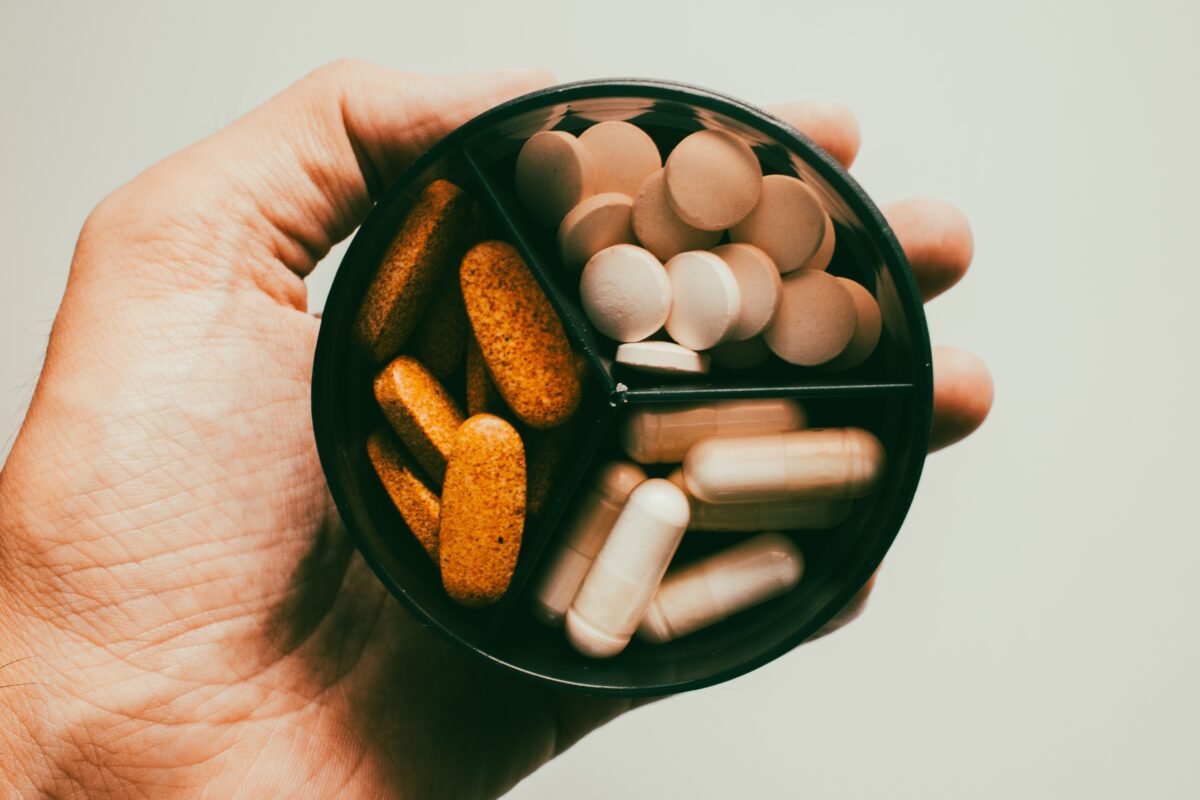
Best for: women who want broad coverage at a very low price
Nature Made Multi for Her is the easiest recommendation for the average adult woman who simply wants a safety net for her diet. One tablet provides about 23 vitamins and minerals, best multivitamin for women including all eight B vitamins, 18 mg of iron (100% DV, the right level for women who still menstruate), 125% DV of vitamin D and well over 100% DV of folate.
Why it earns the top spot
- Independent verification: USP verified, which means the label is checked against what is actually in the bottle.
- Price: a bottle of 90 usually costs about the price of a single coffee-shop lunch.
- One tablet a day, which makes it easy to stick with.
What to watch
- Calcium (about 15 to 19% DV) and magnesium (about 24% DV) are modest. That is normal for a multivitamin, because minerals take up a lot of room in a pill.
- Some nutrients, such as magnesium, come in forms that absorb less efficiently. best multivitamin for women This matters mainly if you are deficient.
- The iron form (ferrous fumarate) can cause constipation in some people.
- Not suitable for vegans or vegetarians (it contains gelatin in some versions).
- Formulas are sold in several versions (for example, regular and 50+ with no iron), so check you are buying the one that matches your age.
2. Best Vegan Multivitamin for Women: Ritual Essential for Women 18+

Best for: vegan and plant-based women in their 20s to 40s who eat a mostly healthy diet
Ritual takes a “fill the gaps” approach rather than packing in everything. Two capsules provide 50 mcg (2,000 IU) of vitamin D3, 1,000 mcg DFE of folate, 8 mcg of B12, 8 mg of iron, 30 mg of magnesium, best multivitamin for women 90 mcg of vitamin K2 and 330 mg of omega-3 DHA from microalgae. It is USP verified and its capsules include a mint-scented tablet meant to reduce any fishy aftertaste.
Why it stands out
- DHA from algae is hard to find in a multivitamin, and it is vegan.
- A published 12-week trial (Osburn et al., 2021, Frontiers in Nutrition) in 94 healthy premenopausal women found it raised vitamin D, folate and omega-3 levels. Note that the trial was funded by the company and the sample was healthy, premenopausal women only.
What to watch
- It has no vitamin C, calcium or selenium, and only a couple of B vitamins. If your diet is limited, you may need more than this.
- Price is higher than drugstore options.
- Only one omega-3 (DHA), no EPA.
- Check the label for the serving size. Some retailer listings show “1 capsule” while the brand’s recommended dose is 2.
3. Best Multivitamin for Women Over 50: Thorne Women’s Multi 50+

Best for: postmenopausal women who no longer need iron
After menopause, iron needs drop from 18 mg to 8 mg a day, while calcium needs rise (1,200 mg a day for women 51 and older, according to the NIH). best multivitamin for women Thorne’s 50+ formula leaves out iron, includes magnesium and some calcium, and lets you choose three to six capsules a day depending on how much support you want.
Why it works
- No iron, which avoids constipation and unnecessary accumulation after menopause.
- NSF Certified for Sport and free from gluten, dairy and soy.
- Flexible dosing.
What to watch
- The full dose is six capsules. That is a lot to swallow every day.
- Some nutrients (vitamin E, B12, pantothenic acid, vitamin C) are far above the Daily Value at the full dose. High numbers are not automatically better, best multivitamin for women so ask your doctor if you take blood thinners or other medication.
- A multivitamin will not cover your calcium needs. Food and, if advised, a separate calcium supplement do most of the work.
4. Best Gummy Multivitamin for Women: Lemme Multi Gummies
Best for: women who struggle to swallow tablets
Two gummies a day provide more than 25 vitamins, best multivitamin for women minerals and fruit extracts, and the brand carries a Clean Label Project award. They are vegetarian-friendly and come in a raspberry-orange flavor.
What to watch
- Each serving has about 4 g of added sugar.
- Gummies generally contain less of the minerals that are bulky (calcium, magnesium) and often no iron, so they usually do not replace a tablet or capsule if you need iron.
- Gummies can lose potency faster if stored in heat, so keep the bottle in a cool, dry cupboard.
- Higher price: roughly $40 for 30 servings if you buy once, less with a subscription.
5. Best Multivitamin With Iron: One A Day Women’s Petites
Best for: women of reproductive age with heavy periods or a diet low in iron, who dislike big pills
Two small tablets supply 18 mg of iron (100% DV), best multivitamin for women 400 mg of calcium (about 31% DV), 1,000 IU of vitamin D, 665 mcg of folate and 6 mcg of B12. It is among the cheapest options on this list.
What to watch
- No independent certification is listed on the retailer page, which is a reason to check the bottle for a USP, NSF or ConsumerLab seal before you buy.
- Contains animal-derived ingredients, so it is not for vegans.
- Iron can upset the stomach. Take it with food if it does.
- Do not take iron “just in case.” If you have never been checked, ask your doctor for a ferritin test first, especially if there is any family history of iron overload.
6. Best Organic Multivitamin for Women: Garden of Life mykind Organics Women’s Once Daily
Best for: women who prefer food-based ingredients and certified organic products
This is a whole-food style multivitamin, with an organic fruit and vegetable blend, best multivitamin for women certified vegan, certified gluten-free and Non-GMO Project verified. It supplies 125% DV of vitamin D and all eight B vitamins.
What to watch
- Very low in iron (about 2.5 mg), so it is better for women who no longer menstruate or who get iron from food.
- It does not contain magnesium, which many women fall short on.
- The tablet is on the larger side.
- The food blend is proprietary, so anyone with food sensitivities should read the full ingredient list. “Whole-food based” does not mean “better absorbed” and it is not a proven advantage.
- Check the serving size on your bottle. Retail listings differ between one and two tablets.
7. Best Prenatal Multivitamin: Thorne Basic Prenatal
Best for: women trying to conceive, pregnant or nursing
A regular women’s multivitamin is not designed for pregnancy. best multivitamin for women Thorne Basic Prenatal provides 45 mg of iron as ferrous bisglycinate (generally gentler on the stomach), 1.7 mg DFE of folate, 110 mg of choline, 25 mcg of vitamin D3 and 25 mg of zinc across three capsules.
What to watch
- It contains no DHA, so ask your provider whether you need a separate omega-3.
- Three capsules a day, which some people find hard to remember.
- Prenatal needs are individual. Folic acid (at least 400 mcg a day, per the CDC) should ideally start before pregnancy. Always confirm the product and dose with your midwife or doctor.
Honorable Mention: mindbodygreen Ultimate Multivitamin+
If budget is no issue and your diet is restricted, this vegan, 27-nutrient formula with 9 mg of iron is one of the most comprehensive options. At more than $1.50 per serving, it is overkill for most women.
How We Chose the Best Multivitamin for Women
We used the same checklist for every product, and we recommend you use it when shopping:
- Independent testing: USP, NSF, ConsumerLab or a similar third-party seal. This is the single most important filter, because in the United States, the FDA does not approve dietary supplements before they are sold.
- Sensible doses: nutrients close to the Daily Value for most people. We flagged anything far above it.
- Right nutrients for women: iron (for menstruating women), folate, vitamin D, B12, calcium and magnesium.
- Clear labeling: serving size, forms of each nutrient and the full ingredient list, with no hidden “proprietary blends” hiding the amounts.
- Practicality: pills per day, form (tablet, capsule, gummy), dietary suitability (vegan, vegetarian, gelatin-free) and price per serving.
- Brand transparency: easy to find certificates, manufacturer details and return policy.
We did not rank products by popularity, affiliate commissions or discount codes.
Do Women Really Need a Multivitamin? What the Evidence Says
Here is the honest answer that most “best multivitamin” pages skip: for many healthy women eating a varied diet, a multivitamin is not essential.
- Johns Hopkins researchers reviewed large studies in the Annals of Internal Medicine editorial “Enough Is Enough: Stop Wasting Money on Vitamin and Mineral Supplements.” They found multivitamins did not reduce the risk of heart disease, cancer, cognitive decline or early death in generally well-nourished people.
- Healthy people are also more likely to take supplements regularly, which makes it hard to separate the effect of the pill from the effect of a healthy lifestyle.
Where a multivitamin can genuinely help
- Women who could become pregnant: at least 400 mcg of folic acid daily helps prevent neural tube defects, as recommended by the CDC.
- Women with heavy periods or low iron: iron can be useful, but only if a blood test shows it.
- Vegans and vegetarians: B12, and sometimes vitamin D, iodine and omega-3.
- Women over 50: B12 absorption declines with age, and calcium and vitamin D needs increase.
- Restricted diets, eating-pattern changes, malabsorption (such as celiac or Crohn’s disease), or limited sun exposure.
- Pregnancy and breastfeeding, when a prenatal formula is more suitable.
If none of these applies and your diet is balanced, you can reasonably spend that money on food instead.
What to Look for in the Best Multivitamin for Women
Nutrients that matter most for women
| Nutrient | Why it matters | Daily need (adult women, general) | Watch out |
|---|---|---|---|
| Iron | Red blood cells, energy | 18 mg (ages 19 to 50), 8 mg (51+), 27 mg in pregnancy | Constipation; excess is harmful. Upper limit 45 mg |
| Folate / folic acid | Neural tube defect prevention | 400 mcg DFE (600 in pregnancy) | Upper limit 1,000 mcg from supplements |
| Vitamin D | Bones, immunity | 600 IU (15 mcg) up to age 70, 800 IU after | Upper limit 4,000 IU |
| Vitamin B12 | Nerves, red blood cells | 2.4 mcg | Absorption falls with age; vegans need a source |
| Calcium | Bone health | 1,000 mg (19 to 50), 1,200 mg (51+) | Multivitamins rarely cover this; upper limit 2,500 mg (2,000 mg after 50) |
| Magnesium | Muscles, sleep, nerves | About 310 to 320 mg | High-dose supplements can cause loose stools |
| Choline | Fetal brain development | 425 mg (450 mg in pregnancy) | Often missing from multivitamins |
| Iodine | Thyroid | 150 mcg (220 in pregnancy) | Too much can affect the thyroid |
Values come from NIH Office of Dietary Supplements fact sheets and the CDC. Your own needs may differ, so ask your doctor.
Red flags on a label
- “Proprietary blend” with no amounts listed.
- Doses of 1,000% DV or more for fat-soluble vitamins (A, D, E, K) with no medical reason.
- No third-party seal and no certificate of analysis.
- Miracle claims such as “detox,” “boosts metabolism” or “prevents disease.”
- Biotin at very high doses: the FDA warns that biotin can interfere with some lab tests, including thyroid and heart-attack tests. Tell your doctor and lab if you take it.
How to Choose the Best Multivitamin for Women by Age and Life Stage
| Stage | What to prioritize | What to limit |
|---|---|---|
| 18 to 30 | Folate, vitamin D, iron if periods are heavy | Extras like “hair and skin” blends you do not need |
| 30 to 50 | Iron (if menstruating), folate, B12, D | High-dose vitamin A |
| Planning pregnancy / pregnant | A prenatal with folic acid, iron, choline, iodine | A regular multivitamin with high vitamin A |
| Perimenopause and menopause | Calcium and vitamin D from food and supplements, magnesium | Iron once periods stop, unless advised |
| 50 and over | B12, vitamin D, calcium and magnesium; no iron | Very high doses of vitamin E and A |
| Vegan or vegetarian | B12, D, iodine, DHA, iron and zinc | Gelatin-based products |
Tablets, Capsules or Gummies: Which Is Better?
- Tablets: cheapest and usually the most minerals per serving, but can be large.
- Capsules: easier to swallow, often used for delayed-release or oil-based nutrients.
- Gummies: the easiest to take consistently, but often with added sugar and fewer minerals (usually little or no iron), and potency can drop in heat.
- Best choice: the form you will actually take every day, as long as it covers your real gaps.
Vegan, Vegetarian and Halal Considerations
Many tablets and softgels use gelatin from animal sources, and some contain vitamin D3 from lanolin. If you follow a vegan, vegetarian or halal diet, look for “vegan” certification (the Vegan Society or similar) or a halal certification on the pack, and confirm with the manufacturer if the label does not say. Algae-based DHA, plant-based capsules and lichen-derived vitamin D3 are good signs.
How and When to Take Your Multivitamin
- With food. Multivitamins contain fat-soluble vitamins (A, D, E, K), which absorb best with a meal that contains some fat. Taking them with food also reduces nausea.
- Same time every day, such as with breakfast, to build a habit.
- Split the dose if the label gives more than one pill and you feel queasy.
- Separate from some medicines. Iron and calcium can interfere with thyroid medication (levothyroxine), certain antibiotics and some osteoporosis drugs. Space them a few hours apart, and ask your pharmacist for exact timing.
- Do not double up. Count vitamins from fortified foods, protein shakes, hair and skin supplements and any separate vitamin D, iron or calcium you take.
- Store properly: a cool, dry place, away from the bathroom and kitchen heat.
Who Should Be Careful or Avoid Multivitamins
- Anyone taking prescription medicine, especially blood thinners (vitamin K), thyroid medication, chemotherapy or immunosuppressants. Ask your doctor or pharmacist first.
- Current or former smokers should avoid supplements with high-dose vitamin A or beta-carotene, which the NIH links with an increased lung cancer risk in this group.
- Women with hemochromatosis or other iron overload conditions must avoid iron-containing formulas.
- Pregnant women should use a prenatal formula chosen with their provider, because too much preformed vitamin A can harm the baby.
- People with kidney disease, because some minerals and vitamins can build up.
- Children and teens need age-appropriate formulas, not adult ones.
Possible side effects
Nausea, constipation (mainly iron and calcium), diarrhea (magnesium), a metallic taste, and dark stools with iron. Stop and speak to a clinician if you notice a rash, swelling, severe stomach pain or any unusual symptoms.
Price, Availability and Smart Buying Tips
- Compare price per serving, not per bottle.
- Buy from the brand, large pharmacies or a trusted retailer, not from unverified marketplace sellers (counterfeit supplements exist).
- Check the expiry date and a sealed lid.
- Subscriptions can save 15 to 35%, but only subscribe once you know the product suits you.
- If you live outside the U.S.: availability, formulas and prices differ by country. Look for the same certification seals, or choose a locally regulated product with a clear nutrient label.
Frequently Asked Questions About the Best Multivitamin for Women
Which multivitamin is best for women?
The best multivitamin for women depends on age, diet and health. For most adults, a USP- or NSF-verified formula with iron (if you still menstruate), folate, vitamin D and B12 is a good start. Women over 50 usually do better with an iron-free formula.
Is it safe to take a multivitamin every day?
For most healthy adults, a standard daily multivitamin at or near 100% of the Daily Value is considered safe. Problems arise when you also take other supplements and exceed upper limits, so add up all sources.
What vitamins should women take daily?
Needs differ, but the nutrients women most often fall short on are vitamin D, folate (if pregnancy is possible), iron, calcium, magnesium, B12 and choline. A blood test tells you more than guesswork.
What is the best time of day to take a multivitamin?
With a meal, usually breakfast or lunch. Some people find that taking it at night with dinner reduces nausea. Consistency matters more than the clock.
Do women need a multivitamin with iron?
Only if you menstruate, are pregnant, or have low iron confirmed by a test. After menopause, an iron-free formula is usually more appropriate.
Final throught: Which Is the Best Multivitamin for Women?
There is no single winner for every woman, and any page that says otherwise is selling you something. Here is the short version:
- Most women, most of the time: Nature Made Multi for Her, a verified, affordable all-rounder (check the version that matches your age).
- Vegan or plant-based: Ritual Essential for Women 18+.
- After menopause: Thorne Women’s Multi 50+.
- Pills are a problem: Lemme Multi Gummies, with the sugar and mineral trade-offs in mind.
- Need iron in a small tablet: One A Day Women’s Petites, ideally confirmed by a blood test first.
- Prefer organic, food-based: Garden of Life mykind Organics Women’s Once Daily.
- Pregnant or planning to be: Thorne Basic Prenatal or another prenatal chosen with your provider.
Whatever you pick, look for an independent testing seal, check the dose against your age and diet, and talk to a doctor or pharmacist if you take medication or have a health condition. A multivitamin is a safety net, not a substitute for good food.