
Shoulder Pain Relief: Causes, Treatments, Exercises, and When to Get Help


Shoulder pain relief depends on the cause, but most shoulder pain can be eased at home with sensible steps. You can usually do things to ease it yourself, and you should get medical help if it doesn’t start feeling better after 2 weeks. That means calming the activities that aggravate it, shoulder pain relief using simple pain relief and heat or cold if they help, and keeping the shoulder gently moving. Severe pain, pain after an injury, or pain with chest symptoms needs prompt medical help.
This guide is general education, not a diagnosis. Shoulder pain has many possible causes, and the safest approach depends on yours.
What Causes Shoulder Pain?

The shoulder is the most mobile joint in your body, and that flexibility comes at a price: it has many moving parts that can be strained, irritated or injured. shoulder pain relief Pain can come from muscles, tendons, ligaments, bones, bursa, nerves or other tissues in the shoulder, and sometimes pain felt in the shoulder actually comes from a problem in the neck.
Here is a simple guide to the most common causes. Symptoms overlap, so this table cannot tell you what you have. It only shows how different problems can look.
| Possible cause | What it often feels like | Typical clues |
|---|---|---|
| Rotator cuff tendinopathy or tear | Ache in the outer or front shoulder, pain lifting the arm, weakness | Pain at night or with overhead movement; weakness suggests a tear |
| Bursitis and impingement | Pain when raising the arm to the side or overhead | Often follows repetitive overhead activity; a “pinching” feeling in the shoulder |
| Frozen shoulder (adhesive capsulitis) | Deep ache with progressive stiffness | Both active and passive movement become restricted; can last many months |
| Osteoarthritis or inflammatory arthritis | Stiffness and pain that build over time | Morning stiffness, grinding or catching, gradual onset |
| Dislocation or instability | Sudden pain after a fall or injury; feeling that the joint slips | Visible change in shape, severe pain, inability to move the arm |
| Fracture | Severe pain after trauma | Swelling, bruising, deformity, unable to lift the arm |
| Referred pain | Pain felt in the shoulder but not clearly linked to movement | May come from the neck, chest, lungs or abdomen; often with other symptoms |
Rotator Cuff Problems
The rotator cuff is a group of four muscles and their tendons that stabilize the shoulder and help lift and rotate the arm. Overuse, age-related wear or a sudden injury can irritate or tear them. shoulder pain relief Typical features include pain when reaching overhead or behind the back, a dull ache that disturbs sleep, and weakness in more serious cases.
Bursitis and Shoulder Impingement
A bursa is a small fluid-filled cushion that reduces friction between tendons and bone. When it becomes inflamed (bursitis), shoulder pain relief or when tendons and bursa are squeezed in the narrow space beneath the bony tip of the shoulder (impingement), raising the arm can become painful. These conditions often occur together with rotator cuff irritation.
Frozen Shoulder and Arthritis
Frozen shoulder causes pain and a gradual loss of movement. Pain and stiffness that don’t go away over months or years can point to frozen shoulder or arthritis, such as osteoarthritis or rheumatoid arthritis. shoulder pain relief Because the treatment and the expected course differ from a simple strain, a clinician’s assessment is worthwhile if stiffness is the main problem.
Injuries and Referred Pain
Falls, sports injuries and accidents can cause fractures, dislocations and ligament or tendon tears. In young people, the most common cause is shoulder instability, shoulder pain relief which usually follows an injury and causes the shoulder to partially or fully dislocate.
Referred pain deserves special attention. Sometimes pain in the shoulder comes from another area such as the neck or chest, and it can also be referred from the lungs or even the gallbladder. shoulder pain relief Symptoms unrelated to shoulder movement, such as pain on breathing, shortness of breath or vomiting, mean you should seek medical advice. That is why a “shoulder problem” that doesn’t behave like a shoulder problem should never be ignored.
How to Get Shoulder Pain Relief at Home
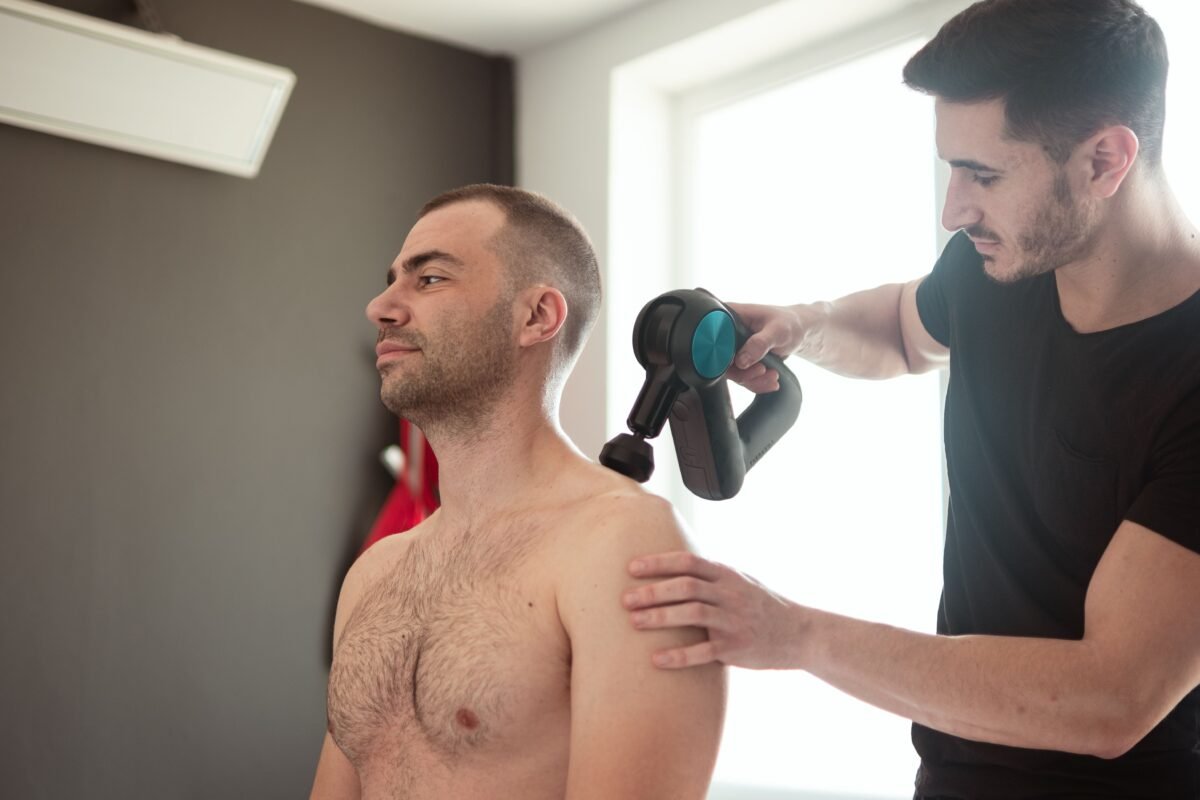
For most people with mild to moderate pain and no red flags, shoulder pain relief home care is the right place to start. Getting the right pain relief so you can return to your usual activities is described as the key to success in the early stages.
1. Adjust, don’t stop
In the first days, changing or reducing your usual activities may help, and you should try to stay at work or return as soon as you are able. shoulder pain relief The goal is to avoid the movements that clearly provoke pain (heavy lifting, reaching overhead, carrying bags on the sore side) while not immobilizing the shoulder completely. Prolonged rest can make stiffness worse.
2. Keep gently moving
Gentle, pain-tolerable movement helps keep the joint from stiffening. shoulder pain relief Staying active and avoiding static positions is a standard piece of self-management advice. Change position often, especially if you work at a desk.
3. Consider simple pain relief
Over-the-counter options are commonly used. A hospital patient leaflet describes simple pain relief such as regular paracetamol or ibuprofen as important for controlling pain so you can move more easily, shoulder pain relief and advises seeing your GP about stronger painkillers if pain persists. The NHS also points to creams or gels applied to the skin and to heat and cold packs as options.
Medicines are not right for everyone. Ibuprofen and similar anti-inflammatory drugs can be unsuitable for people with stomach ulcers, kidney disease, asthma, heart conditions or who are pregnant, and they can interact with other medicines. shoulder pain relief Paracetamol (acetaminophen in some countries) has dose limits that must be respected. Names, strengths and availability vary by country, so ask a pharmacist or doctor which option suits you, and follow the label.
4. Support your posture
NHS-derived guidance advises against slouching when sitting and against rolling the shoulders or bringing the neck forward. A neutral posture reduces strain on the structures around the shoulder.
5. Be patient, but set a deadline
It can take four to six weeks to recover fully from mild shoulder pain. shoulder pain relief The next sections explain when to stop waiting and get help.
Should You Use Ice or Heat?
Neither is best for every cause, and the evidence is modest, so use whichever feels better and is safe.
| Cold (ice pack) | Heat (warm pack, warm shower) | |
|---|---|---|
| May help with | Recent injuries, swelling, sharp irritation | Stiffness, muscle tightness, long-standing aches |
| How to use | Wrap in a cloth, apply for about 10–15 minutes at a time | Use warm, not hot; about 15–20 minutes |
| Avoid | Applying directly to skin; falling asleep on it | Using heat on a freshly swollen, inflamed or injured area; very hot packs |
| Be extra careful if | You have reduced skin sensation, circulation problems or diabetes | Same: reduced sensation increases the risk of burns |
Stop if the skin becomes painful, red or blistered, or if the pain worsens. shoulder pain relief If you’re unsure, a pharmacist or physiotherapist can advise.
How to Sleep With Shoulder Pain

Night pain is one of the most common complaints, and positioning can make a real difference:
- Avoid lying on the painful shoulder. If you can, sleep on your back or on the opposite side.
- Support the arm. Place a small pillow under the sore arm, or hug a pillow when lying on the other side, so the arm isn’t hanging forward or pulled down.
- Raise your upper body slightly with an extra pillow if lying flat aggravates the pain.
- Avoid sleeping with the arm overhead.
- Plan your pain relief. If a medicine is suitable for you, taking it at a sensible time before bed (following the label) may help you settle.
- Warm up first. A warm shower before bed can ease stiffness for some people.
Night pain that is severe, new, or wakes you every night should be discussed with a healthcare professional. shoulder pain relief Pain that continually affects your sleep and daily activities is a reason to seek GP attention.
Shoulder Pain Exercises and Stretches
Movement is central to recovery for many shoulder problems, but the right exercises depend on the diagnosis. Stretching a stiff frozen shoulder, strengthening a tendon problem and protecting a dislocated joint call for different approaches. shoulder pain relief Treatment success depends on an accurate diagnosis, and a bespoke exercise program is usually prescribed for your specific problem.
Safety rules for any shoulder exercise
- Stay in a comfortable range. A mild stretch or ache is acceptable. Sharp, stabbing or worsening pain is a signal to stop.
- Never force a movement or bounce into a stretch.
- Don’t exercise a shoulder after a significant injury, with suspected fracture or dislocation, visible deformity, sudden major weakness, fever, or marked redness and swelling. Get assessed first.
- Stop and seek advice if you develop tingling, numbness or spreading arm symptoms.
- Go slowly. A few gentle repetitions, a few times a day, is better than one aggressive session.
- Seek a physiotherapist if your diagnosis is uncertain, function is limited, or you’re not improving.
Three gentle movements many people use
These are general, low-intensity examples commonly used for mild, non-injury shoulder stiffness. They are not a prescription.
- Pendulum swing. Lean forward with your good hand on a table and let the sore arm hang relaxed. Gently sway it in small circles or back and forth, using your body movement rather than muscle effort. Do this for about 30–60 seconds.
- Cross-body stretch. Bring the sore arm across your chest and support it at the elbow with your other hand. Hold a gentle stretch for 15–30 seconds, then release. Don’t pull hard.
- Shoulder blade squeeze. Sit or stand tall, then gently draw your shoulder blades back and down as if tucking them into your back pockets. Hold for a few seconds and release. This builds the posture muscles that support the shoulder.
For a wider range of exercises, look for guidance from a qualified physiotherapist or national health service resources. shoulder pain relief The NHS, for example, links to video exercises for shoulder pain from the Chartered Society of Physiotherapy.
Medical Treatments for Shoulder Pain
If self-care isn’t enough, a clinician will examine you to work out what’s causing the pain. shoulder pain relief The number of physiotherapy sessions you may have depends on the cause of your shoulder pain, and if you’re still in pain after your sessions end, you should go back to the GP, who might prescribe more physiotherapy or suggest another treatment.
| Treatment | What it involves | Benefits | Limits and risks |
|---|---|---|---|
| Activity modification | Temporarily changing tasks that aggravate the shoulder | Low-risk; allows irritated tissue to settle | Too much rest can cause stiffness |
| Physiotherapy | Assessment, tailored exercise, manual techniques, education | Often the foundation of treatment for many conditions; addresses causes, not just symptoms | Takes time and consistency; access and waiting times vary by country |
| Pain-relief medicines | Oral medicines, creams or gels | Can reduce pain enough to keep moving | Possible side effects and interactions; not a cure; check suitability with a pharmacist or doctor |
| Corticosteroid injections | Anti-inflammatory medicine injected near the problem area | May give short-term relief in selected conditions | Effect may be temporary; repeated injections can have risks; not suitable for everyone |
| Other procedures (such as shock-wave therapy) | Used in selected conditions under clinical guidance | May help certain problems, such as some calcific tendon issues | Evidence and availability vary |
| Surgery | Repair, release or joint procedures | Can help selected conditions, such as significant tears, persistent instability or severe arthritis, when other treatments haven’t worked | Not needed for most shoulder pain; has risks and a long rehabilitation |
In some cases you may be referred to a shoulder specialist or even a surgeon if the problem is more significant or hasn’t improved with treatment. Access to care, referral routes and costs differ widely between countries and health systems. shoulder pain relief In many areas of the UK, for example, you may be able to get physiotherapy from community musculoskeletal services without a GP referral, but this is not true everywhere. Check how things work where you live.
When Should You See a Doctor?
You don’t need to wait for an emergency. Make an appointment with a doctor or physiotherapist if:
- Your shoulder pain is getting worse or doesn’t improve after 2 weeks.
- It’s very difficult to move your arm or shoulder, or the pain started after an injury or accident such as a fall.
- You have pain, tingling, numbness or weakness in your face or arms.
- The pain continually affects your sleep and daily activities.
- You develop acute shoulder pain while feeling unwell or feverish.
- You have pain that keeps returning, even if each episode settles.
- You have a history of cancer and develop new bone pain.
Don’t self-diagnose. Shoulder pain that doesn’t improve after 2 weeks might be caused by something that needs treatment.
Shoulder Pain Warning Signs That Need Emergency Help
Some situations are urgent. Because emergency numbers differ around the world, call your local emergency number (for example 911 in the US, 999 or 112 in the UK, 112 in much of Europe, or the number used where you are).
Call emergency services immediately if shoulder pain comes with:
- Chest pain, pressure, tightness or squeezing
- Shortness of breath or difficulty breathing
- Sweating, nausea, light-headedness or fainting
- Pain spreading to the jaw, neck or arm, especially the left arm
- Sudden, severe pain after major trauma, such as a car crash or a fall from a height
These can be signs of a heart attack or another life-threatening problem, shoulder pain relief and pain in the shoulder can be the way a heart problem shows itself. Don’t drive yourself, and don’t wait to see whether it passes.
Seek urgent medical care (same day) for:
- Sudden or very bad shoulder pain, being unable to move your arm, or an arm or shoulder that has changed shape or is badly swollen.
- These can be signs of something serious, like a broken or dislocated bone, or a torn ligament or tendon.
- Fever with a hot, red, swollen shoulder
- Sudden loss of strength, numbness or loss of function in the arm
- Significant trauma, such as a fall from a height or a direct blow, with pain that prevents any shoulder movement.
How to Prevent Shoulder Pain From Returning
Once the pain settles, a few habits lower the chance of a repeat.
At your desk or workstation
- Keep your screen at eye level, and your keyboard and mouse close enough that your elbows stay near your sides.
- Support your forearms and avoid reaching for long periods.
- Take a movement break every 30–60 minutes: roll your shoulders back, stand, stretch.
- Avoid cradling a phone between ear and shoulder.
With lifting and carrying
- Keep loads close to your body and avoid heavy overhead lifting.
- Alternate the shoulder you carry bags on, or use a backpack with both straps.
- Share heavy tasks and use equipment where possible.
With exercise and sport
- Warm up before throwing, swimming, racket sports, weights or overhead activities.
- Increase training load gradually, and don’t ignore early niggles.
- Include balanced strengthening for the shoulder blade and upper back muscles, as well as the front of the shoulder.
- Learn proper technique, and seek coaching for overhead sports.
For everyday health
- Maintain good general fitness and a healthy posture.
- Manage underlying conditions such as diabetes, which can raise the risk of stiffness and frozen shoulder.
- Avoid long periods in one position, such as hours of driving or gaming without breaks.
What to Expect During Recovery
Recovery times vary a lot. Mild shoulder pain may take four to six weeks to recover fully, while some conditions take much longer. Shoulder pain can be a long-term problem, shoulder pain relief and some people still have symptoms after 18 months, which is why a correct diagnosis is important for getting the right treatment. Most shoulder pain settles naturally with little or no help, though occasionally extra help is needed.
A realistic way to track your progress:
- Days 1–7: Reduce aggravating activity, use pain relief and heat or cold if helpful, and start gentle movement.
- Weeks 2–4: Pain should be gradually easing and movement improving. If not, see a clinician.
- Weeks 4–6: Many mild cases are largely better. Gradually return to normal activity and add gentle strengthening.
- Beyond 6 weeks: If symptoms persist or recur, get a proper assessment and a tailored exercise plan.
Expect some good days and bad days. Improvement is rarely a straight line.
Frequently Asked Questions
How can I get shoulder pain relief at home?
Start by reducing the activities that aggravate the pain, keep the shoulder gently moving, and consider simple pain relief if suitable for you. Heat or cold may help. Seek advice if pain is severe, follows an injury, or isn’t improving after about two weeks.
What is the fastest way to relieve shoulder pain?
There’s no guaranteed fast fix. Reducing aggravating activity, suitable pain relief and gentle movement often give the quickest practical improvement, but the right approach depends on the cause. Severe or sudden pain needs medical assessment rather than home treatment.
Is ice or heat better for shoulder pain?
Neither is best for everything. Cold may suit a recent injury or swelling, and warmth may ease stiffness. Protect your skin, avoid extremes of temperature, and ask a clinician if you’re unsure.
What is the best exercise for shoulder pain?
There is no single best exercise for every shoulder condition. A physiotherapist can choose movements based on your diagnosis, pain level and mobility. Gentle range-of-motion exercises are commonly used for mild stiffness, but always stay within a comfortable range.
Can shoulder pain go away on its own?
Often, yes. Many cases settle over weeks. However, pain that is worsening, persistent, recurrent or limiting movement should be assessed to find the cause.
Why does my shoulder hurt at night?
Lying on the affected side or having the arm unsupported can increase pressure on irritated tissues, and tendon and bursa problems are often worse at night. Persistent night pain that disrupts your sleep should be discussed with a healthcare professional.
Can shoulder pain be a sign of a heart attack?
Sometimes, yes. Shoulder or arm pain together with chest pressure, breathlessness, sweating, nausea, faintness or jaw pain is an emergency. Call your local emergency number straight away.
Should I rest or exercise a painful shoulder?
Usually a balance: avoid the movements that clearly worsen pain, but don’t immobilize the shoulder for long, since this can cause stiffness. After an injury, get assessed before exercising.
Do I need an X-ray or scan?
Not always. A clinician will decide based on your history and examination. Imaging is more likely after injury, with significant weakness or deformity, or when symptoms don’t respond to treatment.
When is surgery needed for shoulder pain?
Only a minority of people need surgery. It may be considered for selected problems, such as significant tendon tears, recurrent dislocation or severe arthritis, usually after other treatments haven’t worked.
Sources and Further Reading
- NHS, Shoulder pain: symptoms, self-care and when to seek help
- MedlinePlus (US National Library of Medicine), Shoulder pain
- AAOS OrthoInfo, Shoulder pain and common shoulder problems
- NCBI Bookshelf / InformedHealth.org, Shoulder pain: What helps?
- Cleveland Clinic, Shoulder pain
- Harvard Health, Shoulder pain
- Chartered Society of Physiotherapy, shoulder exercise videos and physiotherapist finder
- Regional NHS musculoskeletal (MSK) services’ patient self-help pages
This article provides general health education and is not a substitute for professional medical advice, diagnosis or treatment. Always seek the advice of a qualified healthcare professional about your condition. Never ignore professional advice or delay seeking it because of something you’ve read here. If you think you may be having a medical emergency, contact your local emergency number immediately.
Final Thoughts
Shoulder pain is common, uncomfortable and usually not dangerous, and most cases improve with a mix of patience and practical steps: easing off the movements that hurt, keeping the joint gently mobile, using suitable pain relief, and supporting your posture and sleep position. The most important skill is knowing the difference between pain you can manage yourself and pain that needs a professional.
Give simple self-care a fair trial, but set yourself a deadline. If the pain hasn’t started to ease after about two weeks, if it follows an injury, if you can’t move your arm properly, or if it’s disturbing your sleep and daily life, get it assessed. A correct diagnosis makes the difference between guessing and treating the actual cause.